
Oldbury is a Black Country town of canals, chemicals and hard graft. The canals looped round the old centre, the chemical works at Langley and Rood End lit up the night sky, and tube makers, maltsters and brick makers filled the streets with work. Today the town is home to Sandwell’s council house, and its homes run from Victorian terraces in Langley and Rood End to inter-war semis in Bristnall and Causeway Green, post-war estates and tower blocks at Lion Farm and Brandhall, and newer streets on old works land. Many of them still have old plaster that is cracked, blown or patched.
RCR Connections Ltd plasters, re-plasters and repairs walls and ceilings in homes right across Oldbury. We’re Birmingham based, covering the whole of the Midlands, and Oldbury is just off the M5 at junction 2, a short run from us. Our team has 62 years of combined experience.
This page is about plastering inside the house: walls, ceilings, re-plastering and repairs. For the outside of the house, see our page on rendering in Oldbury.
Plastering quotes in Oldbury: WhatsApp me on 07453 614095 or message the page. We work Monday to Friday 7am to 5pm and Saturday 7am to 1pm, and we’re closed on Sundays.
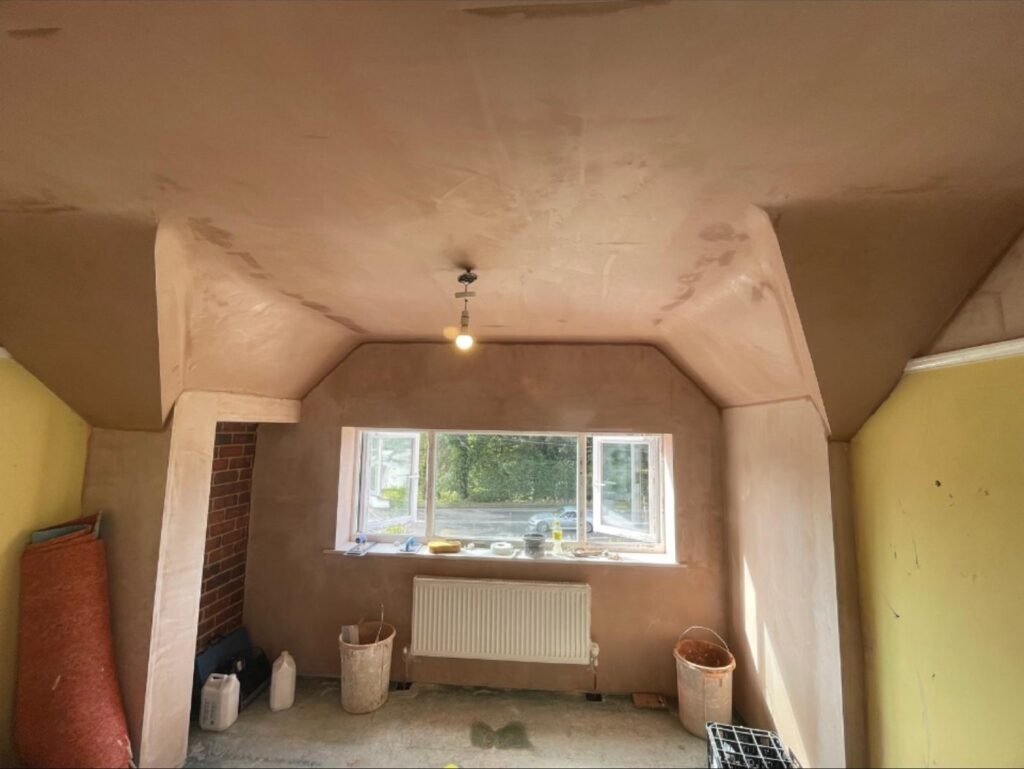
Plastering, re-plastering and repairs in Oldbury
Plastering walls and ceilings
A new coat of finish plaster over sound walls gives a smooth, flat face ready for paint. In Oldbury we do it most after a rewire, when old paper comes off and the walls are rough, or when a room has been patched too often. We cover floors and furniture, prepare the walls, fix loose areas, then put on the new coat and trowel it smooth.
Re-plastering
When old plaster is blown, cracked right through, crumbling or soft from damp, going over it won’t last. We take it back to the brick or block and re-plaster with a backing coat and a finish coat, or board the wall and plaster over. Re-plastering is common in the older terraces of Langley, Rood End and round the town centre.
Plaster repairs
We repair cracks, holes, blown patches, damage after a leak, chases left by electricians and plumbers, and broken corners, and blend them in so they don’t show once painted.
Ceilings
Lath and plaster ceilings sag and crack with age. We over-board and plaster, take down failed ceilings and put up new boards, or repair a small area. We also cover artex with a fresh, smooth coat.
Plasterboard and dry lining
For new walls, stud walls, loft rooms and extensions we fit plasterboard and plaster it, or dry line walls where the old plaster has failed.
Coving
We fit coving to finish a room, and repair old coving that has cracked or come away.
Oldbury through the years
A small place on the hill
For centuries Oldbury was a small village on rising ground between the Rowley Hills and the Birmingham road. It had a market and a few streets round what is now Church Square, and farms and common land round it.
The canal island
In 1769 James Brindley’s Birmingham Canal came through, winding round the contours. Later canals and branches, including the Titford Canal, which climbs up toward the Titford Pools, and the new main line in the valley below, left the old town almost ringed by water. Works crowded along the banks, and Oldbury became a town of boats, wharves and smoke.
Chemicals, tubes and malt
In the 1850s Albright and Wilson began making phosphorus at Langley, for matches and later for much else, and Chance and Hunt made chemicals nearby. Accles and Pollock made steel tubes in the town for the best part of a century. Langley had big maltings, and its tall maltings building by the canal is still a landmark. There were brick works, iron works and railway carriage works too. All of them needed workers, and street after street of brick terraces went up for them.
Victorian and Edwardian homes
Langley, Rood End, Rounds Green, Brades Village and the streets round the town centre filled with terraces from the mid-1800s to the early 1900s. They were built with solid brick walls, lime plaster and lath ceilings, and many still have them, patched and changed over the years.
Between the wars
In the 1920s and 1930s semis and council homes spread over the higher ground toward Warley, Bristnall, Causeway Green and Whiteheath. Most were built with hard wall plaster on brick and lath and plaster or early board ceilings, and they are now close to a hundred years old.
After the war and today
After 1945 many old terraces were cleared. Big estates and tower blocks went up at Lion Farm, Brandhall and round the edges of the town, and the M5 was built across the town on a long viaduct in the 1970s. In 1974 Oldbury became part of Sandwell, and the council house stands in the town. Newer homes have since gone up on old works land along the canals.
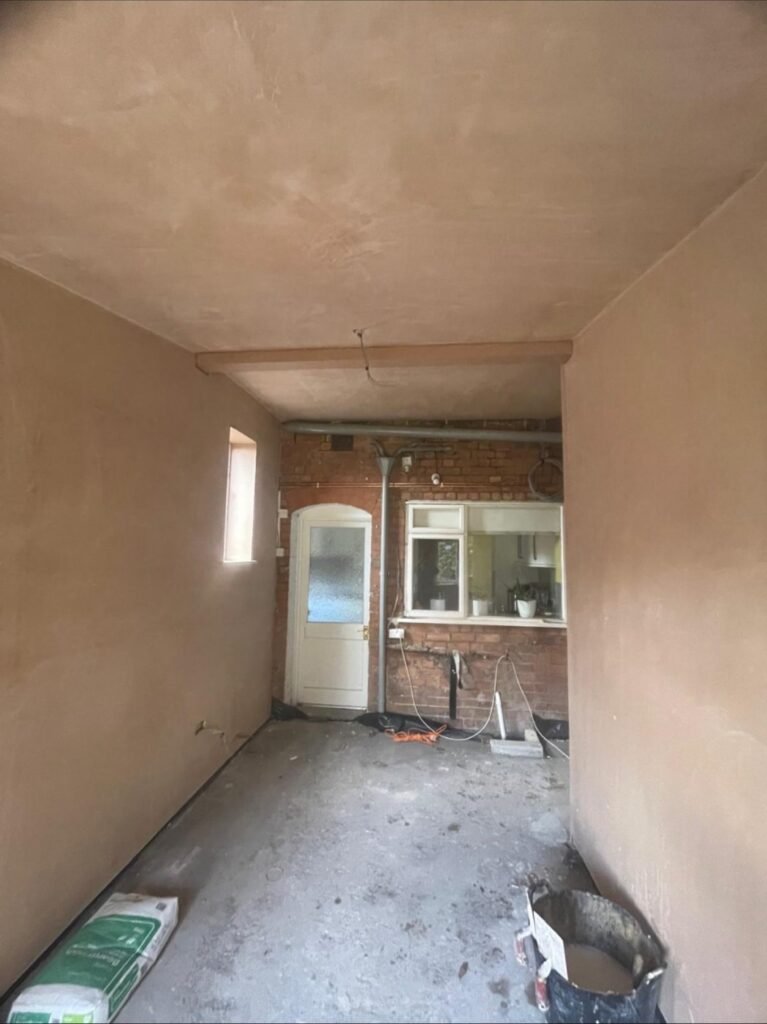
The homes we plaster most in Oldbury
Victorian and Edwardian terraces
Langley, Rood End, Rounds Green, Brades Village and the streets round Church Square. Solid brick walls with old lime plaster, often blown and patched many times. Lath ceilings that sag or crack. We re-plaster walls where the old plaster has failed, repair what is sound, and over-board or replace old ceilings.
1920s and 1930s homes
Bristnall, Causeway Green, Whiteheath and the roads toward Warley. Hard plaster on brick, cracked and patched after years of rewiring, heating and new windows. Bay windows and curved walls need a careful hand.
Post-war estates and tower blocks
Lion Farm, Brandhall and the estates round the edges of the town. Many still have their first plaster and artex ceilings. Covering artex, plastering walls after a rewire or new kitchen, and repairs.
1960s to 1980s homes
Private estates across Causeway Green, Brandhall and toward Tividale. Cavity walls, plaster on block or board, and textured ceilings. Plastering over tired walls and covering artex are the main jobs here.
Newer homes
New streets on old works and canal-side land. Plasterboard walls on dabs that crack at joins and corners. We repair the cracks, tape the joins and re-plaster where needed.
Neighbourhood notes
Town centre and Church Square
The old core round Church Square, Birmingham Street and the market, with shops and flats above. Repairs and re-plastering in flats, offices and older buildings.
Langley
East of the centre, round the old chemical works and the maltings. Victorian terraces, inter-war homes and newer streets. Full re-plasters, lath ceilings and repairs.
Rood End
East, toward Smethwick. Close streets of older terraces. Old lime plaster, blown walls and ceilings.
Rounds Green and Brades Village
North-west, toward Tividale and the canals. Older terraces, post-war homes and newer estates. A real mix of jobs.
Bristnall and Warley
South-east, toward Warley Woods. Inter-war semis and larger homes. Bay rooms, through lounges and cracked ceilings.
Causeway Green and Whiteheath
South and south-west. Inter-war and post-war homes and later estates. Ceilings, artex covering and walls after new kitchens.
Lion Farm and Brandhall
South, near the M5. Post-war estates, flats and tower blocks. Artex covering, plastering after rewires, and repairs.
Lime plaster in old Oldbury homes
The oldest terraces in Oldbury were plastered with lime. Lime is soft and lets a solid wall breathe. It can last a long time if the wall stays dry, but leaks, hard cement patches, and plastic paints and vinyl papers that trap damp all damage it.
We look at what is on the wall first. Sound lime plaster can often be kept and repaired. Where it has blown or gone soft, we take it off and re-plaster. On solid walls that have had damp, we pick a plaster that suits the wall, and we will tell you if a lime plaster is the better choice.
Homes by the canals
With canals on almost every side, many Oldbury homes sit close to the water. Walls on the canal side can stay cool and damp, and plaster on them can stain or blow. We check walls for damp before we start, use plasters that suit them, and tell you plainly if there is a problem outside, such as a leaking gutter or failed render, that needs fixing first.
Cracks and old works ground
Oldbury sits on old coal measures, and in places on ground that was dug for clay, filled or built over after works closed. Inside the house, ground movement can show as long cracks over doors and windows, or ceilings that crack along the same line again and again. Most of these cracks are old and stable, and we repair them with tape or mesh under the new plaster so they are less likely to come back. If a crack is wide, is growing, or a door has started to stick, we will tell you to get it looked at first.
Homes near the M5
The M5 runs right across Oldbury on its long viaduct, and homes near it, and near the busy Wolverhampton Road and Birchfield Lane, feel a little shaking from traffic. Over the years that can open fine cracks at ceiling joins and room corners. We tape and mesh the joins when we plaster these homes so the finish copes better.
Plastering after damp work
Many Oldbury homes have had damp work over the years. After a damp course or new drainage, the walls need re-plastering with the right plaster. We will ask what was done and by whom, so we pick the right plaster for it. If the cause of the damp hasn’t been dealt with, we will say so before we plaster.
Chimney breasts and old fireplaces
Victorian and inter-war homes have chimney breasts in most rooms. The plaster round old fireplaces is often cracked, stained or patched, and when a fire is opened up or closed off, the wall needs making good. We plaster round new openings and over closed ones so the wall looks right.
Bay windows and curved walls
Inter-war semis in Bristnall, Causeway Green and toward Warley often have big bay windows. The walls and ceilings in the bay have tricky angles and curves. We keep them true and get crisp lines where the bay meets the room.
Plastering for new kitchens
When a new kitchen goes in, old tiles and units come off and the walls behind are often rough and uneven. We plaster them flat so the new units sit well and the tiles or paint look right. We fit in with your kitchen fitter so the walls are ready and dry in time.
Plastering after a leak
A burst pipe or a leak from above can soak a ceiling and walls. Once the leak is fixed and things have dried out, we take off the damaged plaster and repair or replace it. A sagging, wet ceiling needs care. If you see one, keep out of the room and turn off the water. In flats, a leak from the flat above is one of the most common reasons we are asked to come out.
Knock-throughs
Many Oldbury owners knock the front and back rooms into one, or open the kitchen into the back room. Once the builder has made the opening and put in the steel, the walls and ceiling round it need plastering so the join doesn’t show. We plaster the new opening, the walls either side and the ceiling, so it looks like one room.
How an Oldbury plastering job runs
First contact
You WhatsApp me photos of each room and the walls and ceilings you want done, with your postcode. A short video walking through helps even more.
The visit
For bigger jobs we come out, tap the walls for hollow areas, look at the ceilings, and talk through what you want and when.
The quote
You get a clear written quote that says which rooms, which walls and ceilings, whether we are plastering over or taking back, and how long it should take.
On the day
We arrive at 7am, cover floors and furniture, and set up a clean work area. Old plaster comes off where needed, beads go on the corners, and the new coat goes on.
Finishing up
We clean up, take the rubbish away, and tell you how long to leave the walls before you paint.
What goes on your walls
- Finish plaster is the thin top coat that gives the smooth face.
- Backing coats build up the wall when old plaster comes off. Some suit hard brick, some soft brick or block.
- Lime plaster suits some old solid walls where the wall needs to breathe.
- Plasterboard comes in standard, moisture-resistant and fire-rated types.
- Beads and tape give straight corners and stop cracks at joins.
Artex: what you should know
Many Oldbury homes built or done up before the 1990s have artex on the ceilings. Old artex can contain a small amount of asbestos. It is safe while it is left alone, which is why we plaster over it rather than scrape or sand it. If you want it taken off, it should be tested first.
Bathrooms and shower rooms
In terraced homes the bathroom is often in the back outrigger, with cold walls on three sides. Old plaster round baths and showers is often soft, stained or blown. We take off what has failed, use moisture-resistant boards where needed, and plaster the rest so your tiler or decorator has a flat, sound wall. An extractor fan that works makes a big difference.
Stairwells and landings
Stairs in Oldbury terraces are steep and narrow, and the walls take knocks every day. We use proper stair platforms to reach safely, and plaster the full height in one go so there are no joins halfway up.
Questions we often get in Oldbury
Can you plaster over my old walls?
If the old plaster is sound, yes. If it is blown, cracked through or damp, it needs to come off first. We tap every wall before we decide.
My ceiling is cracked all over. Does it have to come down?
Not always. Often we can over-board and plaster it, which is quicker and less messy. If it is sagging badly, it may need to come down.
Can you cover my artex ceiling?
Yes. We plaster over artex without disturbing it.
How soon can I paint?
Usually about a week for a finish coat in a warm, airy room. Longer for thick re-plastering or in winter.
The year in plastering
Plastering is an inside job, so we work all year round. In winter, new plaster takes longer to dry, so keep the heating on low and a window open a little. In summer, sunny rooms can dry plaster too fast, so we may keep the blinds down while we work.
If you have just moved in
If you have just bought a home in Oldbury, the walls and ceilings are best sorted before you decorate, lay new carpets or move furniture in. We can plaster several rooms in one go so you are ready to paint.
Plaster or dry lining?
- Wet plaster goes straight onto brick or block in a backing coat, then a finish coat. It is hard and solid, and good on walls that take knocks. It takes longer to dry.
- Dry lining means fixing plasterboard to the wall, then a finish coat. It dries quicker and suits walls that are very uneven or where old plaster has failed badly.
On old solid walls in Langley and Rood End, the right choice depends on the state of the wall and whether there has been damp. We will tell you what we think suits it best.
Uneven walls in old houses
Walls in Victorian terraces are rarely straight. They lean, bow and dip, and corners are not square. We can make them much flatter, but on very old walls we will talk to you first about how far to go. Sometimes a wall that follows the line of the house looks better than one forced flat.
Cold walls and black mould
Solid brick walls are colder than cavity walls. In winter, damp air from cooking, washing and drying clothes settles on them, and black mould grows in corners and behind furniture. New plaster won’t cure that on its own. Good airflow, extractor fans and keeping furniture a little off the wall all help. We will give you honest advice on what is plaster and what is air.
Flats above shops
Birmingham Street, Church Street, Langley High Street and the parades in Bristnall and Causeway Green have flats above shops. They often have old ceilings and walls that need care. We plan the work round the shop below and keep dust and noise down.
Flats, maisonettes and tower blocks
Oldbury has many blocks of flats and maisonettes, and some tall tower blocks. Getting materials in and rubbish out takes planning, and the work has to fit round neighbours. We protect lifts, stairs and shared halls, and keep the job tidy. If you rent from the council or a housing group, check with them before any work starts.
Old wiring, pipes and plaster
If you are having a rewire or new heating, have it done before we plaster. Chasing cables into new plaster means patching it again. We are happy to fit our work round your electrician and plumber.
Before you sell or let
Buyers and tenants notice cracked ceilings and patched walls. A fresh coat of plaster and a coat of paint make a home look clean and well kept for photos and viewings. Landlords often want work done quickly between tenants, with photos of what was done, and we can work to that.
Rooms we plaster most
- Front rooms and through lounges: walls after paper comes off, ceilings with cracks or artex.
- Bedrooms: ceilings that sag, walls with cracks and old patches.
- Kitchens: walls after old units and tiles come off.
- Bathrooms: walls and ceilings in damp rooms, with the right boards and plaster.
- Halls, stairs and landings: walls that take knocks, and steep stairwells.
- Extensions and loft rooms: new boards and block, plastered ready for paint.
Dust and mess
We cover floors, stairs and furniture, seal doors where needed, and carry rubbish out as we go. When a ceiling has to come down, we close the room off and protect the rest of the house. At the end of the day the room is swept and tidy.
Loft rooms and extensions
Many Oldbury families add space rather than move. Loft rooms in terraces and semis, and single-storey extensions at the back, all need boards fixed and plastered. We work with your builder and fit in at the right stage, after the electrics and pipes and before the decorator.
Old works and chapels turned into homes
Round the canals and the town centre, some old works, chapels and shops have been turned into homes or flats. Their walls mix old brick, newer block and boards, and some have tall ceilings. Joins between old and new need tape or mesh so they don’t crack. We plan the job so the finish is even all over.
Plaster round new windows and doors
When old windows are swapped for new ones, the plaster round the frame inside nearly always gets damaged. We plaster the reveals with new beads so the edges are straight and strong, and blend the patch into the wall so it doesn’t show once painted.
Garden rooms and home offices
More people now work from home, and many have turned a box room into an office or built a garden room. Both need the right boards and plaster to give a smooth, solid finish ready to paint and use.
Picking the right time
Because plastering is inside work, the weather doesn’t stop us. Most people like to have it done in one block, room by room, so they only live with the mess once. We often start upstairs and work down, so you always have a clean room to sit in.
Working with other trades
The electrician and plumber finish first, then we plaster, then the decorator, carpet fitter and kitchen fitter follow on. We are happy to talk to your other trades so the timing works.
Questions to ask any plasterer
- Will you plaster over the old walls or take them back?
- What plaster will you use, and why?
- How will you protect my floors and furniture?
- Who will do the work, and how long have they been plastering?
- How long before I can paint?
- Can I see finished jobs?
We are glad to answer all of these before you decide.
Painting new plaster
New plaster needs to dry right through before you paint. It changes from dark pink to an even pale pink when it is ready. The first coat should be a mist coat, a thinned-down emulsion that soaks in and seals the plaster. Avoid vinyl or wipe-clean paints for the first coat, as they can peel.
Why plastering makes such a difference
Smooth, flat walls make a room look bigger and brighter, and paint goes on easier and lasts longer. In a small terrace front room in Langley or Rood End, new plaster and a light colour can change the whole feel of the house.
Langley and the maltings
Langley grew up round the canal, the chemical works and the big maltings, and its streets of terraces were built for the people who worked there. Many have small back yards, outriggers with cold walls and steep stairs. The maltings building by the canal still stands as a reminder of the old trade. In these homes we see blown lime plaster, cracked lath ceilings and walls patched with every kind of filler. A full re-plaster of a room often saves work in the long run over one more patch.
Toward Warley Woods
On the Bristnall and Warley side of town, the homes get bigger and the roads wider as you head toward Warley Woods. Inter-war semis and detached homes here have tall rooms, big bays and long ceilings that show every crack. We over-board or re-plaster these ceilings so they are smooth and flat from wall to wall.
Titford and the Rowley side
Up toward the Titford Pools and the Rowley Hills, the ground rises and the homes mix older cottages with post-war and newer estates. Some streets sit on old pit ground. We look for signs of old movement before we plaster and use mesh over crack lines where it is needed.
Serving hatches and old features
Homes from the 1950s to the 1970s often have features owners now want gone: serving hatches, arches, half-height walls and textured walls. We fill old hatches, plaster over them, and blend the new plaster into the wall either side so the change doesn’t show.
Homes near Sandwell’s council house
Round the council house and the town centre are older streets, offices turned into flats and newer homes built on cleared land. These mix old solid brick with newer block and boards, and the joins between them crack if they are not taped. We plan each job so the finish is even and the joins hold.
Small jobs welcome
Not every job is a full room. A patch after a leak, a crack over a door, a hole where a fireplace came out or a wall chased for new sockets are all jobs we are happy to do. Send us a photo and we will tell you what is needed.
Areas we cover around Oldbury
We plaster homes across Oldbury and round it, including the town centre and Church Square, Langley, Rood End, Rounds Green, Brades Village, Bristnall, Warley, Causeway Green, Whiteheath, Lion Farm and Brandhall, and on to Tividale, Rowley Regis, Blackheath, Smethwick and West Bromwich.
Nearby pages include rendering in Oldbury, plastering in Smethwick, plastering in West Bromwich, plastering in Halesowen, plastering in Dudley and rendering in Wednesbury. See every town on our plastering areas page.
What our customers say
Was amazed by the punctuality from them as far as tradesmen go and the experience was stress-free with a great finish to my maisonette.
James Tranter
We chose them for our home extension, and the transformation was amazing. Their work is top-notch, and I’d recommend them to anyone seeking both quality and luxury in construction.
Emma S
These guys were great lads, grafted hard, and was really happy with the price and the end result. Blimey, it was outstanding!
Michael T
Very impressed with the workmanship and attention to detail. The project was completed on time and exceeded my expectations!
Sophia Reynolds, Property Manager
Our services
More services: Plastering repairs · Plastering and coving · Plastering extensions and lofts.
Get a plastering quote in Oldbury
WhatsApp me on 07453 614095 or message the page. Send pictures or videos via WhatsApp for a quick response, a free quote and advice. Send a photo of each wall and ceiling and your postcode.
Opening hours: Monday to Friday 7am to 5pm, Saturday 7am to 1pm, Sunday closed.
You can also email rcrconnectionsltd@gmail.com or use our contact page. See finished jobs on our projects page.
Plastering in Oldbury: common questions
Do you cover Oldbury and the areas round it?
Yes. RCR Connections Ltd is Birmingham based, covering the whole of the Midlands, and works across Oldbury, from Langley and Rood End to Rounds Green, Bristnall and Causeway Green.
How do I get a plastering quote in Oldbury?
WhatsApp me on 07453 614095 or message the page. Send photos of the walls and ceilings and your postcode. We will come back with a free quote, or arrange a visit.
Do you re-plaster whole rooms?
Yes. Where old plaster is blown, cracked or damp, we take it back and re-plaster the room from scratch.
Can you plaster in a flat or tower block?
Yes. We plan getting materials in and rubbish out, protect lifts, stairs and shared halls, and keep the job tidy.
Do you do small plaster repairs?
Yes. We repair cracks, holes, blown patches, chases after a rewire and damage after a leak.
Can you plaster over artex in Oldbury?
Yes. We cover artex ceilings and walls with a smooth new coat without disturbing the artex, so the room is ready to paint. RCR Connections Ltd has 62 years of combined experience with ceilings like these.
Do you work for landlords in Oldbury?
Yes. We replaster rooms and patch damage between tenants so the house is ready for decorating. WhatsApp me on 07453 614095 or message the page with photos and the address for a quote.
What hours do you work?
Monday to Friday 7am to 5pm and Saturday 7am to 1pm. Sunday closed.