
A little preparation before the plasterer arrives makes the job quicker, cleaner and better. It also means fewer surprises on the day. This guide is a simple checklist: what to clear, what to sort with other trades, what to expect on plastering day, and what to do after we leave.
RCR Connections Ltd is Birmingham based, covering the whole of the Midlands. Our team has 62 years of combined experience, and we plaster rooms in lived-in homes every week, so we know what helps and what gets in the way.
A week or two before
- Book other trades first. New sockets, moved light switches, new pipes, wiring for wall lights and TV cables all need to go in before the plaster, not after. Chasing into new plaster spoils it.
- Decide on extras. Coving, new corner beads, boxing in pipes or a new ceiling are easier to plan now. See our plastering and coving page.
- Strip wallpaper. Plaster should not go over wallpaper. You can strip it yourself, or ask us to do it.
- Tell us about damp or cracks. If you know a wall has been damp, or a crack keeps coming back, mention it. It can change what we need to do.
The day before
- Empty the room. As far as you can. Anything left should go in the middle, away from the walls.
- Take things off the walls. Pictures, mirrors, shelves, curtain poles and blinds. Pull out picture hooks and nails if you can.
- Take down light shades. Especially in rooms where the ceiling is being done.
- Radiators. If a plumber can take them off, the wall behind gets a proper finish. If not, turn them off so they are cold on the day.
- Clear a path. We need a clear route from the door to the room, and space outside or in a garage to mix.
- Water and power. We need a tap for clean water and a socket for the mixer.
- Parking. Let us know about any parking limits near you.
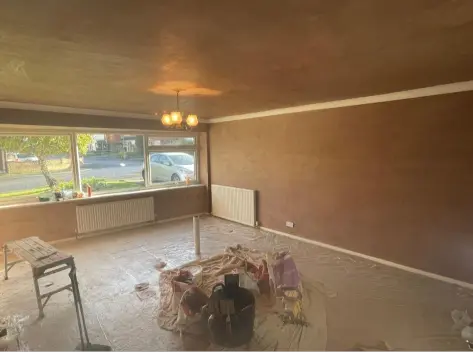
On plastering day
A typical room runs like this:
- Protecting the house. We cover floors, put sheets over anything left in the room and protect doorways and the route in.
- Preparation. Sockets and switches loosened with the power off, loose plaster taken off, cracks opened up and filled, beads fixed to corners and the right primer put on.
- Plaster. If the walls need it, a backing coat goes on first. Then a MultiFinish coat, about 2 mm in two coats, trowelled smooth. On new plasterboard, joints are taped first. Our guide to plastering new plasterboard explains that.
- Clean up. We clear away and leave the room tidy. Socket fronts are put back once the plaster is firm.
Most single rooms with a finish coat take one day. Rooms needing old plaster hacked off and backing coats take longer. Our guide to plastering coats explains the difference.
Living with the work
- Keep pets and children out of the room while we work.
- Keep internal doors shut to keep dust in, especially if old plaster is coming off.
- Move delicate things out of rooms next to the one being done if hacking off is involved.
- Tea is always welcome, but never needed.
After we leave: drying the room
New plaster is full of water and needs to dry slowly and evenly:
- Keep the room at a normal, steady temperature with gentle heat.
- Open a window a little so damp air can get out.
- Do not point heaters at the walls.
- Keep furniture a little away from the walls for the first few days.
In winter it takes longer. Our guide to plastering in cold weather covers that.
Decorating
Wait until the plaster is an even pale pink with no dark patches. Then put on a mist coat, which is watered-down emulsion, before your normal paint. Do not use vinyl paint as the first coat, and do not hang wallpaper until the plaster is fully dry and sized. Our guide to how long plaster takes to dry has more on this.
What to send us first
The more we know up front, the better the plan. Send photos of each wall and the ceiling, rough sizes, and a note on anything you have spotted, such as cracks, hollow patches or old damp. Our plastering walls and ceilings page and our plastering repairs page explain what we can do. We also fit K-Rend monocouche and silicone render outside; see our K-Rend in Birmingham and Solihull page. If you live in Solihull or Shirley, our plasterer in Solihull and plasterer in Shirley pages have more about working in your area.
If the ceiling is being done too
Ceilings are usually plastered before the walls, so drips and splashes land on walls that are still to be done. If your ceiling is part of the job:
- take down light shades and loosen ceiling roses with the power off, or ask your electrician;
- move anything from the top of wardrobes and shelves;
- tell us about any loft hatch, so we know if we need to box round it;
- let us know if there are old lath and plaster ceilings anywhere, because these need more care.
Our ceiling plastering and repairs page explains what happens with old or cracked ceilings.
If old plaster is coming off
Hacking off old plaster is the noisy, dusty part. It is also where hidden problems show up, such as soft brick, old damp, rotten lintels or wiring that is too close to the surface. If we find something like that, we stop and show you before we carry on. Allow a little extra time on jobs where plaster is coming off, and expect a skip or bags of rubble that need taking away. If the wall turns out to be damp, our guide to plastering after a damp proof course explains what happens next.
Booking a room in?
WhatsApp me on 07453 614095 or message the page. Send photos of the room, rough sizes and your postcode, and tell me what is on the walls now.
We work Monday to Friday 7am to 5pm and Saturday 7am to 1pm, and we are closed on Sundays. RCR Connections Ltd is Birmingham based, covering the whole of the Midlands. You can see the towns we cover on our plastering areas and rendering areas pages, and finished jobs on our projects page.
Getting ready for the plasterer: common questions
Do I need to empty the room completely?
As much as you can. Furniture left in the room needs to be in the middle and fully covered, and it slows the job down. An empty room is quicker and cleaner.
Do I need to strip wallpaper before you plaster?
Yes, in most cases. Plaster should not go over wallpaper. We can strip it for you if you would rather, but it adds time.
What about sockets and light switches?
We loosen the fronts and plaster behind them, with the power off. If any need moving or adding, get the electrician in before we start.
Should radiators come off?
It gives the best finish behind them. If you have a plumber, ask them to take radiators off before we arrive. Otherwise we can plaster around them.
Will plastering make a lot of dust?
Plastering itself is fairly clean. Hacking off old plaster is dusty. We cover floors and doorways, but keep doors shut and move delicate things out of nearby rooms.
Can I use the room straight after?
You can walk in it, but leave the walls alone until they dry. Do not hang anything, push furniture against them or paint them until they are an even pale colour.