
Wolverhampton has more kinds of house than most people think. There are big Victorian villas in Tettenhall, Penn and around West Park, long Victorian and Edwardian terraces in Whitmore Reans, Blakenhall and Graiseley, one of the biggest inter-war council estates in the country at Low Hill, and large post-war and 1970s estates at Ashmore Park, Pendeford and Warstones. RCR Connections Ltd renders, re-renders and repairs homes in every one of them. We’re Birmingham based, covering the whole of the Midlands, and the Black Country and Wolverhampton are a big part of our patch.
Between us, the team has 62 years of combined experience. We fit K-Rend monocouche and silicone render, and we also patch and repair old render, roughcast and pebbledash. This page is about rendering. For walls and ceilings inside, see our page for a plasterer in Wolverhampton.
Rendering quotes in Wolverhampton: WhatsApp me on 07453 614095 or message the page. We work Monday to Friday 7am to 5pm and Saturday 7am to 1pm, and we’re closed on Sundays.
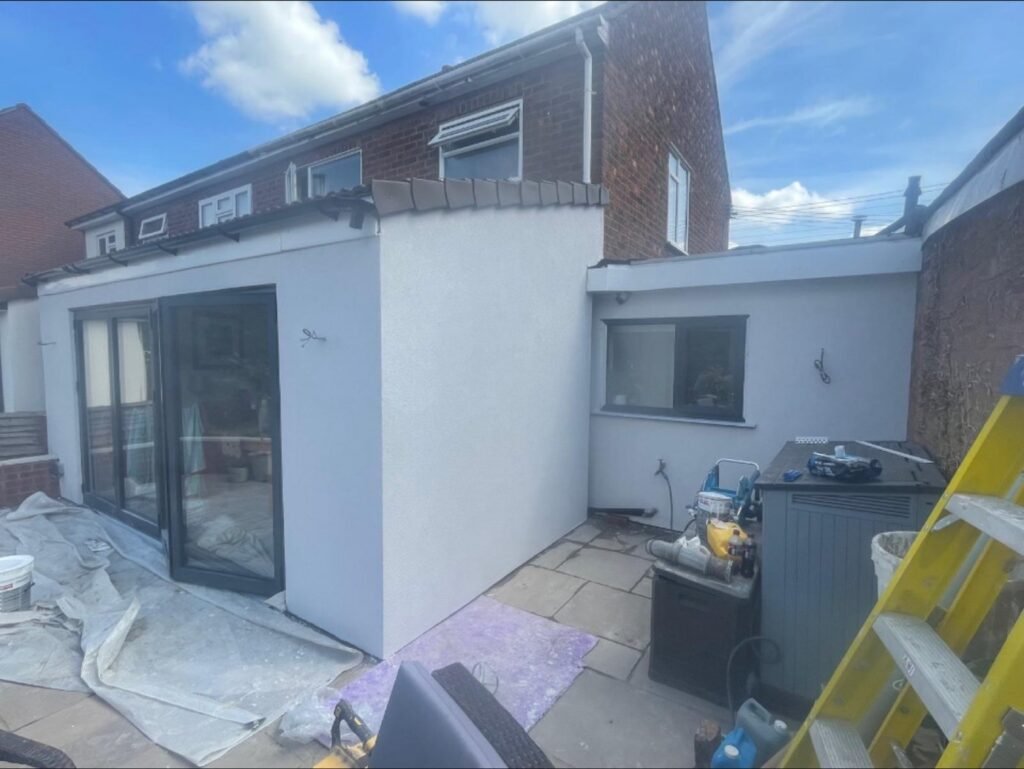
What we do in Wolverhampton
Full re-renders
Taking off old, failing render and putting on a new system from scratch. This is the best answer when large parts of the wall sound hollow, when there are years of patches, or when the wall behind needs work.
Rendering over pebbledash and roughcast
If old pebbledash is still stuck on well, we can put a base coat with mesh over it and then a new finish. It saves stripping and is less mess.
Rendering new blockwork
Extensions, side builds, garage conversions, garden rooms and boundary walls. Block takes render well, and render is often the neatest way to finish it.
Render repairs
Cracks, blown patches, damaged corners, holes where pipes or flues have moved, and render that has been taken too low. We cut out the bad parts and blend in new render as closely as we can.
Re-coating sound render
If your render is sound but stained or tired, a fresh silicone finish over the top can make it look new again.
The two systems we use
K-Rend monocouche
This is a through-coloured render. It goes on thick, in one coat or two close together, and once it has firmed up we scrape it back to a fine, even finish. The colour is all the way through, so it never needs painting. If it gets a small knock, the same colour shows underneath.
It is a strong choice for:
- 1930s semis with tired pebbledash.
- Ex-council homes on the big estates.
- New block extensions and garage conversions.
- Landlords who want a finish that needs very little upkeep.
Silicone render
Silicone render is a thin coat that goes over a base coat with mesh. Rain beads on it and runs off, and dirt doesn’t stick as easily. It lets moisture out of the wall too. That makes it good for walls that get a lot of weather, walls near trees and walls next to busy roads like the Stafford Road, the Penn Road, the Tettenhall Road and the Wolverhampton Road.
It is a strong choice for:
- Houses where you want a smooth, sharp finish.
- North-facing walls that keep going green.
- Re-coating sound old render.
- Some older solid walls, where breathability matters.
We will always tell you which of the two we think suits your wall best, and why. We fit K-Rend monocouche and silicone render, and on some old walls we will say that lime is the better choice.
A city built on metal, locks and paint
Wolverhampton was a wool town in the Middle Ages, and St Peter’s Collegiate Church on the hill in the centre dates back over a thousand years. But the city you see today was mostly built by industry. In the 1700s and 1800s it made locks, keys, tinplate, japanned ware and steel goods. Chubb locks were made here. Mander Brothers made paint and varnish in the town for over two hundred years. Later came bikes, cars and motorbikes, with Sunbeam, Star and others.
The Birmingham Canal runs through the city and drops down the Wolverhampton flight of 21 locks to meet the Staffordshire and Worcestershire Canal. The railway came in the 1850s. As work grew, so did the housing. Terraces went up close to the works. The better off moved west, up the hill to Tettenhall, Compton and Penn, where the air was cleaner, and built large villas there.
In the 20th century the council built on a large scale. Low Hill and Bushbury in the north were among the first big inter-war council estates in the country. After the war came Ashmore Park, Pendeford, Warstones and more. Wolverhampton became a city in 2000.
All of this shows up on the walls. Close to the centre you find old soft brick and lime mortar. On the estates you find cavity brick, some concrete homes, and a lot of original pebbledash and roughcast. On the newer homes you find thin modern render that sometimes cracks early.
House by house: what we see in Wolverhampton
Large Victorian villas
Tettenhall, Compton, Penn, Merridale, the Park Road area and the streets near West Park have many large Victorian and Edwardian houses. Some are brick, some are painted stucco, and some have render on the side and back. These are solid walls. They need to breathe, and hard cement render can trap damp in them. We look at what is on the wall now, and may suggest a breathable base with silicone, or lime, before any monocouche.
Many of these houses are in conservation areas, so the front often needs to be kept as it is. Our work on them is more often on side walls, back walls and old extensions.
Victorian and Edwardian terraces
Whitmore Reans, Blakenhall, Graiseley, Pennfields, Park Village, Heath Town, Bilston and Ettingshall all have rows of terraces. The fronts are usually brick, the backs often rendered.
Common problems:
- Cement render on the back that has cracked and is holding damp.
- Render taken right down to the yard, bridging the damp course.
- Patchy repairs where pipes and windows have been moved.
- Old painted render that peels every winter.
We often take the old render off back walls and put on a new, breathable system with a bead above the damp course.
Inter-war council homes
Low Hill, Bushbury, Fordhouses, Parkfields and parts of Bilston and Wednesfield have large inter-war estates. Many homes have brick on the ground floor and roughcast or pebbledash above. After ninety years, much of it is cracked, hollow or stained.
A lot of owners on these estates now own their homes and want them to look fresh. K-Rend monocouche over a sound base, or a full strip and re-render, gives a clean look that lasts.
Private 1930s semis
Finchfield, Castlecroft, Penn Fields, Goldthorn Park, Oxley, Claregate and parts of Tettenhall Wood have many private 1930s semis. Bay windows, pebbledash on the upper floor, and gables at the side are typical. These are some of the most common rendering jobs we do in the city.
Post-war and 1970s estates
Ashmore Park, Pendeford, Warstones, Merry Hill, Wednesfield, Heath Town and Lanesfield all have post-war and later homes. Some are brick, some are concrete, and some have panels or tile hanging. We can take off tired cladding and render the wall behind, once we know what it is built from.
Newer homes
Newer estates around Pendeford, Fallings Park and on old factory sites in the east of the city often have some render on the front. If it has cracked or gone patchy, we repair it or re-coat it, and match new work to it.
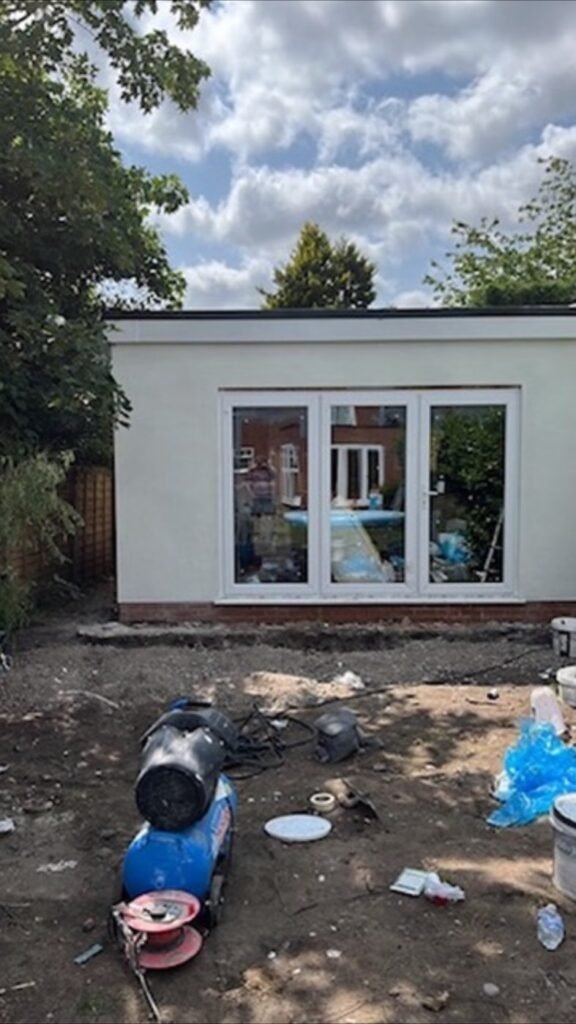
K-Rend in Wolverhampton: where we fit it across the city
Wolverhampton has everything from Victorian villas in Tettenhall to inter-war estates in Bushbury and 1970s homes in Pendeford, and K-Rend monocouche and silicone render is what most owners ask us about. RCR Connections Ltd is Birmingham based, covering the whole of the Midlands, and we are on the west side of the Black Country most weeks. These are the parts of the city we work in most, the houses you find there and the K-Rend jobs they usually need.
- Tettenhall Wood, Finchfield, Castlecroft and Compton. 1930s to 1960s semis and detached homes on the west side, many with a rendered or pebbledashed upper floor. K-Rend monocouche on the top half with brick kept below, or a crisp silicone finish on the whole front, are the usual jobs.
- Penn, Penn Fields, Merry Hill and Goldthorn Park. Inter-war and post-war semis, a lot of them with pebbledash on the front and gable walls. Full fronts and gables in K-Rend are common. South of Goldthorn Park and Lanesfield, our page on rendering in Sedgley covers the homes over the city edge.
- Bushbury, Low Hill and Fordhouses. Large inter-war estates where many homes still have their first roughcast. When it fails we strip it, put on a meshed base coat and finish in K-Rend monocouche, or overcoat it if it is still sound.
- Pendeford, Oxley and Claregate. 1970s and 1980s homes with tile hanging, timber boards and render panels. We take off the tired cladding, fix board or block behind and finish in K-Rend or silicone. Just past Pendeford, see our page on rendering in Codsall.
- Wednesfield, Ashmore Park and Heath Town. Older terraces near Wednesfield centre and big post-war estates round them. Gable repairs, full re-renders in K-Rend and rendered rear extensions make up most of our work here.
- Bilston, Ettingshall and Lanesfield. Old terraces, inter-war council homes and newer houses on former works sites. Where old mine workings can cause slight movement, mesh in the base coat helps the K-Rend or silicone finish cope.
- Whitmore Reans, Blakenhall and Graiseley. Dense Victorian terraces, many let or split into flats. Back walls and side returns get a breathable silicone system above a base bead, and the brick fronts are left as they are.
Wherever you are in Wolverhampton, the first step is the same: WhatsApp me on 07453 614095 or message the page with a photo of each side of the house and your road or postcode. We work Monday to Friday 7am to 5pm and Saturday 7am to 1pm, and between us we have 62 years of combined experience.
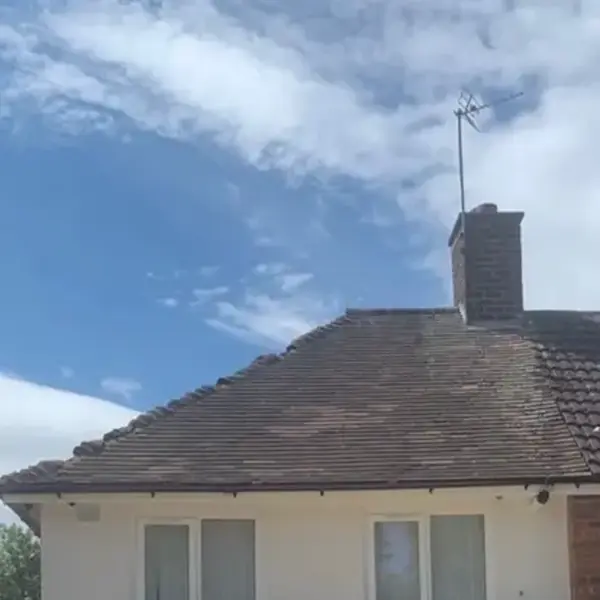
Neighbourhood notes
Tettenhall and Tettenhall Wood
Tettenhall has its own village feel, with Upper Green and Lower Green, the old church and plenty of large period houses. Tettenhall Greens and Tettenhall Road are conservation areas. In these streets we keep to finishes that suit the area and check what consent is needed before starting. Tettenhall Wood has more inter-war and post-war homes, where K-Rend is a common choice. We also have a page for plastering in Tettenhall.
Penn, Penn Fields and Merry Hill
Penn has a mix of old village houses, Edwardian villas and inter-war semis. Penn Fields and Merry Hill are mainly inter-war and post-war semis, many with pebbledash. We do a lot of full fronts and gable walls here.
Finchfield, Castlecroft and Compton
Finchfield and Castlecroft have long roads of 1930s to 1960s semis and detached homes. Compton has older houses near the canal and the Compton Road. This side of the city has a lot of private homes where owners want a clean, smart finish, and silicone render is often the choice.
Whitmore Reans and the Dunstall area
Dense terraces, many split into flats or let to tenants. Back walls and side walls need the most work.
Bushbury, Low Hill and Fordhouses
Large inter-war estates. Many homes still have their first roughcast. When it fails, we strip it and re-render, or put a base coat with mesh over it if it is sound.
Wednesfield and Ashmore Park
Wednesfield is an old village that grew into a busy town, with older terraces near the centre and large estates round it. Ashmore Park is a big post-war estate. We do a lot of gable repairs, full re-renders and extension work here.
Bilston and Ettingshall
Bilston was famous for its steel works and its enamel ware. It has old terraces, inter-war council homes and newer homes on old works sites. Some land here has old mine workings, which can cause slight movement. Mesh in the base coat helps render cope with that.
Blakenhall, Graiseley and Goldthorn Park
Blakenhall and Graiseley have dense Victorian streets. Goldthorn Park has larger inter-war and later homes. Both give us a steady run of repairs and full re-renders.
Pendeford and Oxley
Pendeford was built in the 1970s and 1980s, and Oxley has a mix of ages. Most of our work here is on extensions, gables and replacing tired cladding panels.
Conservation areas and listed homes
Wolverhampton has a good number of conservation areas. They include the city centre, Tettenhall Greens, Tettenhall Road, Park Dale, the West Park area and several more. In a conservation area, rendering over brick on the front of a house usually needs consent. Changing one kind of render for another that looks the same usually does not, but it is always worth checking.
Listed buildings need listed building consent for almost any change to the outside. On listed houses lime is often the only finish the council will accept.
If your house is in one of these areas, ask the council before work starts. We will give you a clear note of what we plan to do so you can explain it. We won’t start until any consent you need is in place.
Black Country brick and what it means for render
Much of the brick in and around Wolverhampton was made locally. Some of it is soft and red, and some is the hard blue Staffordshire brick often used for plinths, sills and garden walls. Both affect how we render.
- Soft red brick can let water in and will crumble if render traps damp behind it. Older walls with soft brick and lime mortar need a breathable system.
- Blue brick plinths are very hard and don’t soak up water. We usually stop render above them with a bead and leave the blue brick showing. It looks smart and keeps the base dry.
- Mixed brick and block on extensions needs mesh over the joins, or the render will crack along them.
Why render fails on Wolverhampton homes
Water at the top
Leaking gutters, blocked downpipes and missing drip edges send water down the face of the wall. Render under a leaking gutter is often the first to blow.
Water at the bottom
Render taken down to the ground soaks up water from paths and soil. It also hides the damp course. We cut it back and fit a bead.
Hard render on soft walls
Cement render on old soft brick traps damp. The brick behind gets wet, freezes and pushes the render off.
No mesh, no beads
Older render jobs often have no beads at corners or edges and no mesh. Cracks start at corners and window openings, and then run across the wall.
Movement
Some parts of the city have old mine workings, made ground or clay soil. Slight movement can crack render that is too stiff. Mesh, the right beads and movement joints help.
Pebbledash and roughcast in Wolverhampton
So many Wolverhampton homes have pebbledash or roughcast that it is worth saying more about it. Here is how we decide what to do:
- We tap every wall and mark the hollow areas.
- If only small areas are loose, we can patch and match.
- If most of it is sound, we fix the loose parts, then put on a base coat with mesh, then K-Rend monocouche or silicone.
- If large areas are loose, it all comes off, and we start again from the brick.
We won’t cover pebbledash that is coming away. The new render would only fail with it.
Getting the wall ready
Every Wolverhampton job starts with the same careful steps:
- Scaffold or towers go up, with boards and sheets to protect paths, drives, plants and sills.
- Windows, doors, gutters and pipes are masked.
- Old render, loose dash and flaking paint come off where needed.
- Cracks are fixed and bad joints raked out and filled.
- Rusty fixings and old cables are dealt with or moved.
- Beads go on at corners, edges, reveals and the base.
- Mesh goes in where it is needed.
- The base coat goes on, then the finish.
Choosing a colour
Most homes in Wolverhampton suit soft colours: white, off-white, cream, light grey or stone. Some tips:
- On a semi or a terrace, look at what the neighbours have.
- On a busy road, a soft off-white or light grey hides dirt better than bright white.
- Darker greys suit new builds, extensions and garden rooms.
- Think about window frames, doors and roof tiles. A colour that works with them looks best.
We can bring samples so you can see them against your own brick and roof.
Extensions, garage conversions and garden rooms
Single-storey extensions are one of the most common jobs we do in the city. If the extension is in block, render is the neatest way to finish it. We can match the house or choose a contrast, such as a white extension on a brick house. Garage conversions often need a small panel of render where the garage door used to be, and getting that to blend in well is a job we do a lot. Garden rooms and outbuildings are quick jobs and make a big difference to the garden.
Landlords and rental homes
Wolverhampton has a large rental market, with students at the University of Wolverhampton and plenty of family lets. For landlords:
- K-Rend monocouche needs no painting, which saves trips back.
- We can work with tenants in, and keep them updated.
- We send photos of the finished work for your records.
The best time of year to render
Render needs dry, mild weather to cure well. We don’t render in frost, heavy rain, strong wind or very hot sun on the wall. Spring, summer and early autumn are best. Winter is fine for repairs on dry, mild days. If you want a big job done before summer, it is worth getting in touch early in the year.
Looking after your new render
- Keep gutters clear and fix leaks quickly.
- Keep soil, bark and paving below the base bead.
- Cut back climbing plants and hedges so the wall can dry.
- If you see a crack, get it looked at before winter.
- Clean it gently with a soft brush and the right cleaner. Don’t jet wash close up.
What to ask before you hire a renderer
- Which system will you use, and why that one?
- Will you strip the old render or go over it?
- Will you fit base beads and stop the render above the damp course?
- Where will you use mesh?
- Who will be on site?
- Can I see photos of finished jobs?
How a job runs
Photos first
WhatsApp me photos of every side of the house, plus your postcode. A short video is even better.
A visit
We look at each wall, tap it for hollow areas, and talk through what you want.
A clear quote
You get a written quote that sets out the work, the system and how long it should take.
The work
Scaffold up, house protected, old render off where needed, new render on.
The walk round
Scaffold down, site cleaned, and a walk round with you to check every wall.
Damp inside the house
If you have damp patches inside, it is worth knowing whether the render is to blame before you book any work. Damp low down on a wall, that gets worse after rain, often comes from render bridging the damp course or from cracks letting water in. Damp on cold corners and behind furniture, that gets worse in winter, is more often condensation. We will tell you honestly what we think, even if the answer is that render is not the problem.
Shops, flats above shops and mixed buildings
The city centre, Dudley Street, Darlington Street, Chapel Ash, Tettenhall Road, Bilston High Street and Wednesfield High Street all have shops with flats above. The upper floors are often old brick with render on the back or sides, and they can be hard to reach. We plan access carefully, often with towers or a small scaffold at the back, and work around opening hours so the shop can keep trading. We usually do the upper floors first, then the lower parts, so nothing gets marked once it is done.
Flats and maisonettes
If you own a flat or maisonette, the outside walls are often shared with other owners, or owned by a freeholder. Before any rendering, check your lease to see who is in charge of the walls and whether you need consent. We are happy to give a quote for the whole block so all the owners can see it. Doing a whole wall at once looks far better than patches done one flat at a time.
Detached houses
Detached homes in Tettenhall Wood, Castlecroft, Perton, Penn and Wergs have four sides to think about, and often a mix of finishes already. Some owners want render all round. Others want brick on the front and render on the sides and back, or render on the upper floor only. We will talk through how each option will look, and where the lines between brick and render should go so it looks planned, not patched.
Corner houses
Corner houses show two faces to the street, so they are seen more than most. They also take more weather on the open side. On corner plots we take extra care with the long side wall, fitting movement joints where needed so it doesn’t crack, and choosing a colour that looks right from both roads.
Bungalows
There are plenty of bungalows in Penn, Castlecroft, Perton, Fordhouses and Wednesfield. Low walls mean easy access, so a bungalow can often be done with towers and no full scaffold. Dormer bungalows have tall gables, which are often the worst part of the render. A full K-Rend monocouche finish on a bungalow is a quick job and changes the look of the whole house.
Lime render on old walls
Some of the oldest houses in Wolverhampton, Tettenhall and Penn have soft brick or stone and lime mortar. Lime lets the wall breathe and moves with it. Modern cement render on these walls can trap damp and cause the brick behind to decay. If we think your wall needs lime, we will tell you. On some old walls a breathable base with a silicone finish is a good middle path. On listed or very old walls, lime may be the only right answer.
Shared walls and neighbours
On semis and terraces, the render often runs right up to the line with next door. A few things help the job go well:
- Talk to your neighbour before work starts, as scaffold may need to go on their side or their path may be covered for a few days.
- Agree where the render will stop. A neat bead on the line looks far better than a ragged edge.
- If your neighbour is thinking of rendering too, doing both at once often looks best and means one lot of scaffold.
Render systems in short
- K-Rend monocouche: through-coloured, scraped finish, no painting, strong and hard-wearing. Best for most semis, ex-council homes and extensions.
- Silicone render: thin coat over a base with mesh, very smooth and clean, sheds water and dirt well, breathable. Best for walls that get a lot of weather or need to breathe.
- Lime: for old, soft, solid walls and listed homes.
Working safely
We put up proper scaffold or towers for every job that needs them. Paths are kept clear where possible, and we tell you each day what is happening. Tools and materials are put away at the end of each day, and the site is left safe. If you have children or pets, we will agree how to keep them away from the work.
What a good finish looks like
When the scaffold comes down you should see:
- Straight, crisp corners and edges.
- An even texture and colour on every wall.
- A neat line at the base, above the damp course and any blue brick plinth.
- Clean windows, sills, doors and paths.
- Tidy finishes round pipes, vents and fixings.
If anything isn’t right, tell us on the walk round and we will put it right.
Weather on the west side of the Black Country
Wolverhampton sits on higher ground at the western edge of the Black Country, and the open side of the city faces the hills of Shropshire and Staffordshire. Walls that face west and south-west take the most rain, carried on the wind. Those walls are where render gets wet most often and where frost does the most harm. On exposed gables in Tettenhall Wood, Perton, Castlecroft and Pendeford we pay extra attention to mesh, drip beads over openings and a good, sound base, so the finish can stand up to it for many years.
Garden walls and boundary walls
Many homes have old brick garden walls, block walls by the drive, or low walls at the front. Render can tidy these up and make them match the house. Garden walls get wet from both sides and from the top, so we always check they have a coping on top to throw off the rain. Without one, even the best render will struggle.
If you have just bought a house
If you have bought a house in Wolverhampton that needs work outside, it is worth getting the render looked at early. A few tips:
- Get the outside sorted before you decorate inside, so damp from cracked render doesn’t spoil new paint.
- Ask us to look at gutters, sills and the base of the wall at the same time.
- Send us the survey notes if you have them. They often point out the walls that need the most work.
- Plan the job for the dry months if you can, so the render cures well.
Areas we cover around Wolverhampton
We render homes across the whole city, including Tettenhall, Tettenhall Wood, Compton, Finchfield, Castlecroft, Penn, Penn Fields, Merry Hill, Goldthorn Park, Blakenhall, Graiseley, Whitmore Reans, Dunstall, Oxley, Pendeford, Fordhouses, Bushbury, Low Hill, Fallings Park, Wednesfield, Ashmore Park, Heath Town, Bilston, Ettingshall and Lanesfield.
Nearby pages include plastering in Wolverhampton, plastering in Tettenhall, rendering in Codsall, rendering in Wombourne, rendering in Sedgley, rendering in Wednesbury and rendering in Walsall. See every town on our rendering areas page.
What our customers say
Was amazed by the punctuality from them as far as tradesmen go and the experience was stress-free with a great finish to my maisonette.
James Tranter
We chose them for our home extension, and the transformation was amazing. Their work is top-notch, and I’d recommend them to anyone seeking both quality and luxury in construction.
Emma S
These guys were great lads, grafted hard, and was really happy with the price and the end result. Blimey, it was outstanding!
Michael T
Very impressed with the workmanship and attention to detail. The project was completed on time and exceeded my expectations!
Sophia Reynolds, Property Manager
Our services
More services: Rendering with sand and cement · Rendering new extensions.
What is in your rendering quote in Wolverhampton
Every written quote sets out, in plain words, what we will do to your walls. As a rule it covers:
- The walls being done: which sides of the house, plus any extension, garage, porch or garden wall.
- Getting the wall ready: whether old pebbledash, roughcast or loose render comes off, and any repairs to the brick or block underneath.
- The render system: K-Rend monocouche, silicone render or sand and cement, with the colour and finish you have picked.
- Beads, mesh and trims: corner and stop beads, mesh over joints and cracks, and the drip line at the bottom of the wall.
- Access and protection: how we reach the high parts, and how windows, doors, paths and plants are covered while we work.
- Clearing up: taking away old render and waste, and leaving the drive and garden tidy.
If anything is not clear on your quote, just ask and we will go through it with you before any work starts.
Get a rendering quote in Wolverhampton
WhatsApp me on 07453 614095 or message the page. Send pictures or videos via WhatsApp for a quick response, a free quote and advice. Send a photo of each side of the house and your postcode.
Opening hours: Monday to Friday 7am to 5pm, Saturday 7am to 1pm, Sunday closed.
You can also email rcrconnectionsltd@gmail.com or use our contact page. See finished jobs on our projects page.
Rendering in Wolverhampton: common questions
Do you cover Wolverhampton and the surrounding area?
Yes. RCR Connections Ltd is Birmingham based, covering the whole of the Midlands, and works across Wolverhampton, from Tettenhall and Penn to Wednesfield, Bilston and Pendeford.
How do I get a rendering quote in Wolverhampton?
WhatsApp me on 07453 614095 or message the page. Send photos of each side of the house and your postcode, and we will come back with a free quote or arrange a visit.
Do you fit K-Rend in Wolverhampton?
Yes. We fit K-Rend monocouche and silicone render across the city, on semis, terraces, ex-council homes, extensions and garden rooms.
Can you render my house in Tettenhall?
Yes. Parts of Tettenhall are conservation areas, so we check what is on the wall now and what consent you might need before we start. On older solid walls we may suggest a breathable system.
Can you render over roughcast or pebbledash?
Yes, if it is still stuck on well. We tap the wall, take off loose parts, put on a base coat with mesh, then the finish. If large areas are loose, it all comes off first.
Can you render a 1930s semi in Penn or Finchfield?
Yes. Lots of private 1930s semis in Penn, Finchfield, Castlecroft and Merry Hill have bay fronts and pebbledash on the top half. We can render over pebbledash that is still stuck on well, or take it off if it is loose, and we take care around the bay roof and window sills so the finish lines up neatly.
Do you render council and ex-council homes in Low Hill, Bushbury and Ashmore Park?
Yes. We render a lot of inter-war and post-war homes on these estates, including ones bought from the council. Many have old roughcast or concrete render that has cracked. We check what is sound, take off what is loose and put a new system on.
Can you render a terraced house in Whitmore Reans or Blakenhall that opens onto the pavement?
Yes. Many terraces there have no front garden. We keep the path clear where we can, cover the pavement and next door’s windows, and leave the street tidy at the end of each day. If scaffold on the pavement needs a council licence, we tell you before any work starts.
Can you render a house in Wednesfield or Bilston that has been extended?
Yes. Lots of homes in Wednesfield, Bilston and Ettingshall have a newer block extension built onto old brick. We put mesh over the joint between the old and new walls so it is less likely to crack, and render the whole side so it all matches.
What hours do you work?
Monday to Friday 7am to 5pm and Saturday 7am to 1pm. Sunday closed.