
Sedgley sits high on a limestone ridge in the north of Dudley borough, in the DY3 postcode, between Gornal, Coseley, Woodsetton and the southern edge of Wolverhampton. From Beacon Hill, the land drops away in every direction, and that height shapes life here, from the views to the weather that hits the walls of every house. The housing is a real mix. In the old centre there are stone and stuccoed buildings going back centuries. Victorian terraces and villas line the older roads, while large numbers of 1930s to 1960s semis and later estates and detached houses fill the rest. Pebble-dash and older render are everywhere, and on this exposed hilltop a lot of it is working hard.
RCR Connections Ltd is a Birmingham based plastering and rendering company covering the whole of the Midlands. We work across Sedgley, Upper and Lower Gornal, Coseley, Woodsetton, Ettingshall Park and Cotwall End. This page looks at what makes Sedgley’s buildings distinctive, the problems we see on its walls and how we fix them.
The hill and the stone beneath it
Beacon Hill
Dudley Council describes Beacon Hill, north of the town centre, as arguably the best viewpoint in the borough, at 237 metres (777 feet) above sea level. The hill was quarried intensively from the 17th century until around the First World War, leaving steep ridges and gullies now taken over by wildlife. A beacon has stood here for over 400 years, and the Black Country Global Geopark notes it was one of the chain of hills where fires were lit to warn of the Spanish Armada.
Sedgley Beacon Tower
The tower on the crest is a Grade II listed look-out tower of Gornal stone, 50 feet high. Dudley Council gives its date as 1846 and connects it with Lord Wrottesley, who is said to have used it for watching the night sky. Phase one of a council restoration, including repairs to the perimeter wall, was completed in March 2026, and a second phase repointed the tower and reinstated missing parts of its stone spiral staircase.
Limestone and Gornal stone
The geopark explains that Beacon Hill exposes fossil-rich Silurian Aymestry Limestone around 420 million years old. The Black Country Geological Society notes it’s the westernmost of three limestone ridges pushed up through the coalfield, and that the old quarry produced a lime known as “brown lime” or “black lime”. The Victorian geologist Sir Roderick Murchison studied the rocks here in the 1830s.
Next door, Gornal gave its name to a sandstone that’s everywhere in old Sedgley: in the church, the Beacon Tower and the high and low stone walls that line the streets of the conservation area.
All Saints conservation area
Designation and appraisal
All Saints conservation area, around the parish church and the old crossroads, was designated by Dudley Council in October 1983. A draft character appraisal, prepared for the council by Node Urban Design, describes the area in detail. It explains that the conservation area lies within a character area named the “Limestone Ridge”, following the high ridge that carried the old route between Sedgley and Dudley. It also notes Sedgley’s importance as a point on the road between the medieval towns of Wolverhampton and Dudley. Maps from 1816 and the tithe map show a core cluster around All Saints Church, with development stretching north and south along what’s now the A459.
All Saints Church
A priest was recorded at Sedgley in Domesday Book, and the church is believed to have origins in the 12th century. But what you see today is mostly a rebuild of 1826 to 1829 by Thomas Lee, with a restoration in 1883 by A. P. Brevitt. It’s built of hammer-dressed Gornal sandstone.
The Court House and The Swan
On Gospel End Street, a two-storey stuccoed building with large sash windows was the court house for the manor of Sedgley until the 1920s. The appraisal records that it was linked by a tunnel under the road to the Red Lion Hotel, formerly the police station with underground cells. Opposite, The Swan Inn, listed Grade II, is stuccoed on the ground floor with roughcast render on the upper floor.
Other rendered buildings
- 12 to 15 Gospel End Street: a rendered terrace built to the back of the pavement, with a datestone of 1821.
- 1 to 4 The Priory: a terrace at the junction with Vicar Street, with a rusticated stone base, brightly painted render and finely detailed stone window and door cases.
- 1 to 7 Dudley Street: a two-storey rendered terrace of shops beside a three-storey brick group in the heart of the village.
- Dormston House: now seen with bare stone, but the appraisal notes it was once stuccoed.
Brick, stone and nails
On Brick Street stands a Grade II listed former nail warehouse of the early 19th century, a reminder of the nail-making trade that occupied much of the Black Country. Late Victorian villas such as Rockville, Oban, Mona and Enderry show off decorative brickwork: buff brick with blue engineering brick or terracotta details, gabled bays and ornate eaves. The almshouses on Ettymore Road are singled out as well preserved, with attractive polychromatic brickwork.
What the appraisal says about materials
The appraisal sets out a clear order:
- Gornal sandstone for the oldest buildings and the many stone boundary walls.
- Stucco on older buildings such as the Court House and The Swan.
- Brick, mostly red, with some polychromatic work, plus painted brick and render on later buildings.
- A wider mix, including timber bargeboards and imported brick, on modern buildings, which the appraisal sees as weakening the area’s character.
Condition
The appraisal found the condition of the area highly varied. Listed buildings were generally in good condition. Problems included poorly designed shopfronts and signs, shutters, newer buildings out of step with their neighbours, and timber windows, doors and stone copings disappearing bit by bit. Changes like these, made one at a time, add up.
Beyond the boundary
The appraisal also points to buildings of interest just outside the conservation area. To the south are the Grade II listed Tipton Street Methodist Chapel and Sunday School. On High Holborn there’s an ornately detailed 19th-century brick building inscribed “The Council House”, with a residential terrace opposite, and the Grade II listed Catholic Church of St Chad and All Saints of 1823 with its presbytery. The appraisal suggests there’s significant scope to extend the boundary to take in more of Sedgley’s historic buildings.
Gornal stone walls
One of the most striking things about old Sedgley is its stone boundary walls. The appraisal describes them as highly characteristic and notes their variety:
- walls combining stone and brick;
- low walls and high walls;
- high walls with stone crenellation along the top;
- low walls finished with stone coping.
Looking after them
Stone walls need the same care as stone buildings. Pointing should be in lime mortar, so the joints rather than the stone take the weather. Copings keep water out of the core of the wall; once they’re loose or missing, frost gets in and the wall starts to fail. Where a wall has been patched with cement or topped with concrete, those repairs often do more harm than good over time.
Walls and houses together
Many older Sedgley houses have a stone wall at the front and render or brick behind. When we’re working on the house, we keep the wall protected and make sure scaffold and materials don’t damage it.
Other conservation areas nearby
Dudley’s list includes two conservation areas in neighbouring Coseley: Oak Street, designated in November 1969, and The Coppice, designated in January 1970 and amended in May 2022.
Free, no-obligation quote in Sedgley: WhatsApp me on 07453 614095 with a few photos, or send us a message.
Life on a hilltop: what the weather does to render
Sedgley’s height is the single biggest factor in how render behaves here. Houses on and around the ridge face more wind and driven rain than those in the valleys below.
Driving rain
Rain driven sideways by strong wind is forced into hairline cracks, around window frames and under poorly detailed sills. On a sheltered wall, a small crack may cause no trouble for years. On an exposed gable facing the prevailing wind, it can let in enough water to blow the render within a few winters.
Freeze and thaw
Water that soaks into render or brick expands when it freezes. On high ground, frosts are more frequent, and each cycle widens cracks a little more. Render starts to sound hollow, then bulges, then falls.
Wind-blown dirt and growth
Exposed walls collect dirt, while sheltered sides behind trees or hedges stay damp and grow algae. Both show up as staining on render.
Gable ends
The tall, flat gable ends of semis and bungalows are the most exposed walls on most houses. They’re where we see the most failures in Sedgley.
Problems we see, and what causes them
Hollow patches on the weather side
Cause: water getting in through cracks, then freezing. Fix: cut back to sound render or strip the elevation, repair the wall, and re-render with a system that sheds water.
Cracks around windows
Cause: stress at the corners of openings, rusting lintels, or render applied without mesh. Fix: check the lintel, use mesh and corner reinforcement in the new basecoat, and seal around frames.
Damp low down
Cause: render carried down to the ground, bridging the damp-proof course, or raised paths and patios. Fix: finish new render on a bead above the damp course, and lower ground levels where needed.
Peeling paint on old render
Cause: non-breathable paint trapping moisture, especially on older solid walls. Fix: remove failing paint, repair the render, then either recoat with a paint that lets the wall breathe or switch to a render coloured right through.
Loose pebble-dash
Cause: age, water getting behind, and weak bonding to the wall. Fix: strip and re-render, or where firmly bonded, render over with a meshed basecoat and coloured finish.
Green and black staining
Cause: damp, shaded walls and overflowing gutters. Fix: clean and treat, repair gutters, and consider a water-repellent finish.
Old buildings: stucco, roughcast and lime
The older buildings in the centre and along Gospel End Street need a gentler approach.
Why old walls are different
Stone and early brick walls were built with lime mortar and, if rendered, with lime-based stucco or roughcast. They let moisture in, but they also let it out. Hard cement render and plastic paints stop that, trapping water in the wall.
Stucco repairs
On buildings like the old Court House, the stucco is smooth and may be scored to imitate stone blocks. Repairs need a compatible mix, matched to the texture and profile of the original. Cement patches on old stucco crack away at the edges and let water behind.
Roughcast repairs
Roughcast, like the upper floor of The Swan, is a textured render thrown on wet with aggregate in the mix. On older buildings it’s usually lime-based and should be repaired with a matching lime roughcast.
Gornal stone
Where stone is exposed, it should be repointed in lime, not cement. Hard cement pointing makes the stone, rather than the joint, take the weathering, and the stone faces crumble.
Limewash and mineral paint
Breathable finishes allow old walls to dry. They need renewing from time to time, but they protect the wall rather than trapping water. Limewash builds up in thin coats and softens the look of stone and brick, while mineral paints bond with the surface and last longer between redecorations. On a building that’s been painted with modern masonry paint for decades, a small test area shows how easily the old coating can be removed before committing to the whole wall.
Permission
Repairs to listed buildings, such as the Court House or The Swan, need listed building consent for anything beyond like-for-like maintenance. In the conservation area, changing the look of a building needs planning permission.
Victorian terraces and villas
Brick fronts
Many Victorian houses in Sedgley were built to show off their brick. Rendering the front of a decorative brick villa would hide its main feature, and in the conservation area it’s unlikely to be allowed. Repointing and brick repairs are usually the better route.
Rendered backs and sides
Rear and side walls were often built in plainer brick and later rendered. These can be re-rendered, ideally in a breathable system on solid walls.
Bay windows
Bays often have rendered or painted panels, with lead or tiled roofs. Water getting in at the roof of the bay is a common cause of failing render below.
Chimneys
Rendered chimney stacks take the full force of the weather on a hilltop. Cracked stack render leads to damp in upstairs rooms.
Inter-war and post-war semis
The largest group of houses in Sedgley are semis built between the 1930s and the 1960s, many on estates spreading out from the old centre.
What they have on the walls
- Pebble-dash or spar dash over all or part of the house.
- Painted render on the upper floor.
- Brick lower floors, sometimes painted.
- Tile hanging or cladding panels on later houses.
The usual job
The most common job is stripping failing dash and re-rendering the whole house in a through-coloured finish. On exposed sites, a silicone finish is often a good choice because it sheds water.
Semis and neighbours
On a pair of semis, the new render ends on a straight, sealed edge where your half meets next door’s. An early chat with the neighbours about scaffold avoids surprises.
Bungalows
Sedgley and Gornal have many bungalows, with rendered or dashed gables. Low eaves mean blocked gutters soak walls directly.
K-Rend in Sedgley: rendering on and around the ridge
Sedgley sits high on the limestone ridge, with an old village core round All Saints, Victorian terraces, Gornal stone walls and large inter-war and post-war estates. Up here walls take a lot of wind and rain, so the right K-Rend monocouche or silicone system matters. RCR Connections Ltd is Birmingham based, covering the whole of the Midlands, and we work across the Black Country most weeks. These are the parts of the area we work in most, the houses you find there and the K-Rend jobs they usually need.
- The village centre and All Saints. Older brick and stone buildings in the conservation area, with flats above shops on Dudley Street and the High Street. Repairs and back walls are the main jobs, and we check what is allowed before any change to a front.
- Upper Gornal and Ruiton. Small houses on steep streets, some built in Gornal stone. Stone walls need a breathable finish, if they need render at all. Later brick semis here often have pebbledash that suits a strip and K-Rend.
- Cotwall End and Gospel End. Larger semis, detached houses and bungalows on the west side, near the nature reserve and the green belt. Exposed gables do well in K-Rend over a meshed base coat. Towards the village below, see rendering in Wombourne.
- Woodsetton and Coseley. Post-war and 1960s estates, with old roughcast, painted render and some non-traditional homes. We find out how the house was built, then use K-Rend or silicone over a mesh base coat. For the rest of the borough, rendering in Dudley covers the homes that way.
- Ettingshall Park and the Wolverhampton side. 1960s to 1980s estates up towards the city, with render panels and cracked render at window corners. Silicone is a tidy way to freshen them up. Our page on rendering in Wolverhampton covers Penn and Goldthorn Park next door.
- Lower Gornal and Gornal Wood. Terraces, inter-war semis and newer homes on the slope down towards Himley. Houses cut into the slope need care at the base of the wall, keeping render above the damp course. See rendering in Kingswinford for the homes further down.
Wherever you are in Sedgley, the first step is the same: WhatsApp me on 07453 614095 or message the page with a photo of each side of the house and your road or postcode. We work Monday to Friday 7am to 5pm and Saturday 7am to 1pm, and between us we have 62 years of combined experience.
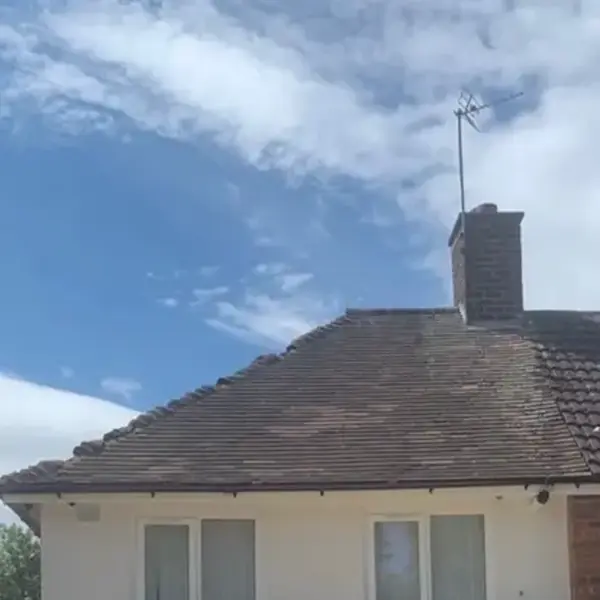
Render systems for Sedgley homes
Silicone render
A thin, tinted top coat laid on a reinforced base layer. Water-repellent and self-cleaning to a degree, so it suits exposed hilltop walls well.
K-Rend monocouche
A thick render, coloured through and scraped to a light texture. Tough and fast to put on; good for blockwork and brick that’s been prepared. More on the K-Rend monocouche page.
Sand and cement
Mixed on site and laid in two or three coats, then decorated with masonry paint. Good for patching and for houses where the rest of the street has plain painted render.
Insulated render
Insulation boards with a basecoat, mesh and finish. On solid-walled houses on high ground, it can make homes warmer and drier, though it needs careful detailing.
Lime
For stucco, roughcast and old solid walls, lime render and breathable finishes are the right choice.
For the pros and cons side by side, read K-Rend monocouche vs silicone vs sand and cement render.
Details that make render last on high ground
On exposed sites, details matter more than anywhere else.
- Sills with a proper drip, so rain is thrown clear of the wall.
- Mesh in the basecoat, especially around openings.
- A drip bead at the foot of the wall, kept clear of the damp-proof course.
- Sealed frames, with flexible sealant around windows and doors.
- Sound gutters and downpipes, so walls aren’t soaked by leaks.
- Flashings, where roofs of porches, bays and extensions meet the wall.
- Movement beads, where extensions join the house.
Coal, limestone and ground movement
Sedgley sits at the edge of the Black Country coalfield and on old limestone workings. The Mining Remediation Authority can provide information about past coal mining for individual properties. Signs such as stepped cracks, sticking doors or cracks that keep coming back after repair should be investigated before re-rendering. New render over a moving wall simply cracks again.
Gornal, Coseley and Woodsetton
Upper and Lower Gornal
Gornal sits on the slopes south-west of Sedgley. Its name lives on in Gornal sandstone, used across this part of the Black Country for churches, houses and walls. Many older cottages in Gornal are built of stone or brick on steep sites, with walls that face the weather on one side and are cut into the slope on the other. The uphill side often suffers from damp where the ground is higher than the floor inside. Render on these walls needs to be breathable, and drainage at the base matters as much as the render itself.
Coseley
Coseley, to the east, has its own conservation areas at Oak Street and The Coppice, and streets ranging from 19th-century rows to big post-war estates. The lower ground means less exposure than Sedgley’s ridge, but the same post-war dash and render problems are common.
Woodsetton and Ettingshall Park
Woodsetton lies along the road towards Dudley, and Ettingshall Park towards Wolverhampton, both with large areas of 20th-century housing. Semis, bungalows and detached houses here often have the same dash and painted render as Sedgley’s estates.
Insulated render on a hilltop house
For solid-walled houses on Sedgley’s high ground, insulated render can make a real difference to comfort.
Why it helps
Solid walls on exposed sites lose heat quickly and can feel cold and damp inside. Insulation on the outside keeps the wall itself warmer, which reduces condensation and mould on the inside face.
What’s involved
Boards are fixed to the wall, followed by a meshed basecoat and a coloured finish. Sills, reveals, the eaves and the base all need adapting to the extra thickness. Pipes, meters, lights and other fixings are moved out.
Choosing the right system
On older walls, a breathable insulation and finish is important, so moisture in the wall can still escape. A survey of the wall, and any damp, comes first.
Rules
Expect building regulations to be involved, and inside the conservation area you should assume a planning application. On a listed building, external insulation is rarely appropriate.
Extensions and new walls
Rear extensions, porches and garages are common on Sedgley’s semis and bungalows. When the main house is re-rendered, it often makes sense to render these too, so the whole house matches. New blockwork takes a K-Rend monocouche or silicone finish well. Where the extension meets the house, we set a flexible bead along the line so any slight movement doesn’t crack the finish.
Driveways, paths and the foot of the wall
Many Sedgley homes have had new drives and patios laid over the years, often with block paving brought right up to the house. If the paving finishes at or above the damp-proof course, rain splashes back up the render and puddles where the wall meets the ground. Before re-rendering, we check the levels and suggest a gravel strip or a drainage channel where the paving is too high, so the new finish can stop cleanly and stay dry.
Shops and flats in the centre
The commercial buildings around the old centre often have flats or offices above shops, with painted or rendered upper floors. The appraisal criticises oversized signs and shutters, but the upper floors frequently keep their original character. When we repair render on these buildings, we keep features such as window surrounds and cornices, work around opening hours, and keep the pavement safe.
Damp inside the house
On a hilltop, damp inside is often blamed on the render. Sometimes that’s right, sometimes it isn’t.
- Patches on the weather side after storms usually mean rain is getting through cracked or hollow render.
- Staining around a chimney breast upstairs often points to the stack.
- Low-level damp on several walls may come from soil or paving piled too high outside.
- Mould on cold walls in winter is often condensation, made worse by solid walls on exposed sites.
We look at both the outside and inside before recommending work, and we’ll tell you if the fix is a gutter, a flashing or ventilation rather than new render.
What the Beacon Tower repairs teach us
The council’s restoration of the Beacon Tower is a good example of how old masonry should be treated. The first phase cleared vegetation, improved the landscaping and repaired the perimeter wall and gates. The second focused on repointing the sandstone tower and putting back missing sections of the stone spiral staircase. In other words: deal with what’s damaging the structure, such as plants and failed joints, and repair in matching materials rather than covering it up.
The same thinking applies to an old stone cottage or a stuccoed house in the village. Stop water getting in, take out what’s causing harm, and repair like with like. Covering an old wall in a modern coating can look tidy for a few years while problems grow underneath.
Stripping dash on an exposed house, step by step
This is the job we do most often in Sedgley, and on high ground the order and timing matter.
1. Check the forecast
We look for a settled spell long enough to strip, repair and get the basecoat on before bad weather. A bare wall on a hilltop shouldn’t be left exposed for long.
2. Protect
Scaffold goes up and is sheeted. Windows, doors, paths and planting are covered. Stripping dash is noisy and dusty, so we warn neighbours.
3. Strip one elevation at a time
Rather than stripping the whole house at once, we usually work wall by wall, so no side is left bare in the weather for longer than needed.
4. Inspect
With the dash off, we can see the wall properly: blown brick faces, cracks, old openings, rusting fixings, poor mortar. We show you anything significant before going further.
5. Repair
Brick faces are built back, cracks are stitched or filled, fixings are removed and joints are made good.
6. Beads and basecoat
Beads at corners, openings and the base give straight lines and protection. The basecoat goes on with mesh bedded in.
7. Finish
The coloured finish is applied once the basecoat is ready, on a dry day without strong wind.
8. Details
Fittings go back, sills are checked, and frames are sealed.
Chimney stacks on the ridge
Few parts of a Sedgley house take more weather than the chimney. A rendered stack on a hilltop is hit by rain from every side, and it has no eaves or neighbouring wall to shelter it.
Signs of trouble
- Cracked or missing render on the stack, often visible from the street.
- Damp patches on a chimney breast in an upstairs room, especially after storms.
- Loose flaunching, the mortar bed around the pots at the top.
- Failed lead flashing where the stack meets the roof.
What we do
Stack work needs safe access, normally scaffold. We strip failed render, check the brickwork and the flaunching, re-render with a suitable system, and coordinate with a roofer if the flashings need replacing. On a disused chimney, capping the pots with ventilated caps helps keep rain out while letting the flue breathe.
Houses cut into the slope
Streets on the sides of the ridge, and in neighbouring Gornal, include many houses built into the slope. One wall faces the open air, while the back or side wall may have soil banked against it.
The problem
Where ground outside is higher than the floor inside, water soaks into the wall from the soil. Render on that wall stays wet, stains, grows algae and fails early. Inside, there may be damp along the bottom of the wall.
The answer
Render alone won’t solve it. The first step is to deal with the ground: lowering it where possible, adding a drainage channel or creating a gap between the wall and the bank. Only then is it worth re-rendering, and on older walls a breathable lime-based finish is the safer choice.
Things to ask before you decide
- Is the existing render worth saving, or is it hollow behind?
- Will the new finish need painting, and how often?
- How will the base, sills and window edges be detailed?
- What happens if the wall is in poor condition when the old finish comes off?
- Is planning permission or listed building consent needed?
- How long will the scaffold be up?
- What will happen to fittings on the walls?
- Can I see examples of the colour and texture outside?
We’ll answer all of these at the survey, in plain terms.
What our survey checks
Before we quote in Sedgley, we look at:
- which way each wall faces, and how exposed it is;
- the condition of the render or dash, tapping for hollow areas;
- cracks, their pattern and whether they look recent;
- the damp-proof course and ground levels all round;
- sills, frames and seals;
- gutters, downpipes and roof flashings;
- chimneys and their render;
- any boundary walls that need protecting;
- access for scaffold, including on sloping sites;
- whether the house is in the conservation area or listed.
On sloping sites, which are common on the sides of the ridge, scaffold may need extra work to stand level, and we plan for this at the survey.
Texture as well as colour
Texture affects how render copes with the weather and how it looks.
- Scraped monocouche gives a soft, slightly open surface that disguises unevenness in older walls.
- Fine silicone gives a crisp, modern look and sheds water and dirt well.
- Coarser silicone grains hide marks and suit busy walls near paths and drives.
- Roughcast or dash can be renewed if you prefer the traditional look or want to match neighbours.
- Smooth lime suits stucco repairs on older buildings.
We bring samples so you can see texture and colour together.
Winter months
Outside work slows down in the coldest months, particularly on high ground where frost lingers. That’s when we turn to jobs indoors, from plastering tired rooms to boarding over artex and making good after electricians. It’s also a good time to book spring rendering and get any planning questions answered.
Planning in Sedgley
Sedgley is in Dudley borough, so planning goes to Dudley Metropolitan Borough Council.
- Renewing render in a finish that looks much like the old one, or like the houses around it, doesn’t normally need an application.
- Rendering bare brick or stone for the first time can need permission, especially in the conservation area.
- The area around All Saints Church is a conservation area, and some buildings are listed. Check with the council’s Historic Environment Team first.
- Gornal stone walls in the conservation area are part of its character and shouldn’t be removed or altered without advice.
How a job works
- Send pictures by WhatsApp to 07453 614095, showing every wall.
- We visit to check the walls, test for hollow areas, and look at sills, gutters and the base.
- Quote in writing, listing the render system, the prep work and anything we can’t see yet.
- Scaffold and protection, with windows, doors, paths and gardens covered.
- Strip and repair, removing failing finishes and fixing the wall.
- Beads, basecoat and mesh.
- Finish coat, applied in suitable weather.
- Details and clean-up, with fittings refixed and scaffold taken down.
Weather
On a hilltop, weather can change quickly. Rendering stops for rain, for frost and when it’s colder than about 5°C, and a gale dries the surface too quickly. Scaffold is sheeted, and we plan around forecasts.
Colour on the hill
- Mid greys and stone colours sit well with Gornal stone and older brick.
- Off-whites and light greys suit post-war semis and bungalows.
- Very light colours on exposed walls show dirt more quickly; slightly warmer tones hide it better.
- Think about how the colour looks from the street and next to neighbours.
Looking after your render
- Clear gutters in autumn, especially on exposed houses that catch leaves blown in from elsewhere.
- Check sills and seals each year.
- Deal with small cracks quickly.
- Keep paths and soil below the damp-proof course.
- Clean off algae before it stains.
Plastering in Sedgley
Indoors, we plaster walls and ceilings and fit and finish plasterboard. Older houses often have damaged lime plaster, while post-war homes may have artex ceilings to cover. See plastering in Dudley and our services page.
Areas we cover
Sedgley, Upper and Lower Gornal, Coseley, Woodsetton, Ettingshall Park, Cotwall End, plus anywhere else in Dudley borough. Related pages: plastering in Wolverhampton, rendering in Wombourne, rendering in Kingswinford, plastering in Stourbridge and areas we cover.
Our services
More services: Rendering with sand and cement · Rendering new extensions.
Ask for a quote
The team has 62 years of combined experience, much of it on exposed Black Country houses like these. For a free quote, WhatsApp a few pictures to 07453 614095; we answer on weekdays between 7am and 5pm, and on Saturdays between 7am and 1pm. Email works too, at rcrconnectionsltd@gmail.com, as does the form on the contact page.
Rendering in Sedgley: common questions
Do you cover Sedgley and the surrounding area?
Yes. RCR Connections Ltd is Birmingham based, covering the whole of the Midlands, and works across Sedgley and the Black Country, Sandwell and Walsall. We also cover Wolverhampton, Dudley and Stourbridge. For the full list, see areas we cover.
How do I get a rendering quote in Sedgley?
WhatsApp me on 07453 614095 or message the page with photos of each side of the house, and tell us what finish you have in mind. We will come back with a free, no-obligation quote, or arrange a visit to look at the walls first.
Do you do K-Rend in Sedgley?
Yes. K-Rend monocouche and silicone render is our main rendering system, and we fit it on houses, extensions, garage conversions and garden walls right across Sedgley, from the village centre and Upper Gornal to Cotwall End, Woodsetton and Ettingshall Park. WhatsApp me on 07453 614095 or message the page with photos for a free quote.
Which render is right for my house?
It depends on the wall, the house and the look you want. We work with sand and cement, silicone, through-coloured monocouche (such as K-Rend monocouche) and insulated render, and we will recommend one after seeing the wall. Our guide K-Rend monocouche vs silicone vs sand and cement render explains the differences.
Is K-Rend suitable for an exposed house on the ridge?
Yes, if it is put on properly. On high ground we use mesh in the base coat, drip beads over windows and doors, and a good bead at the base. We also plan the work for dry, settled weather, because frost and driving rain can spoil fresh render.
Can you render a Gornal stone house?
Usually we would not cover good stone. If an old stone wall does need protection, we use lime or a breathable system, never hard cement or monocouche. On later brick extensions to a stone house, K-Rend can work well.
What hours do you work?
Monday to Friday 7am to 5pm and Saturday 7am to 1pm.