
Halesowen sits on the hills above the River Stour, at the meeting point of the Black Country and the Worcestershire countryside. It began as an abbey estate, grew into a nail-making town, and then spread out with homes of every age. Victorian terraces line the streets round the old town, 1930s semis fill Hasbury, Hurst Green and the roads toward Quinton, and post-war and private estates cover Hayley Green, Lapal, Hawne and Cradley. Many of these homes still have their first plaster, and a lot of it is cracked, blown or patched.
RCR Connections Ltd plasters, re-plasters and repairs walls and ceilings in homes right across Halesowen. We’re Birmingham based, covering the whole of the Midlands, and Halesowen is only a short run from us down the A456 or the M5. Our team has 62 years of combined experience.
This page is about plastering inside the house: walls, ceilings, re-plastering and repairs. For the outside of the house, see our page on rendering in Halesowen.
Plastering quotes in Halesowen: WhatsApp me on 07453 614095 or message the page. We work Monday to Friday 7am to 5pm and Saturday 7am to 1pm, and we’re closed on Sundays.
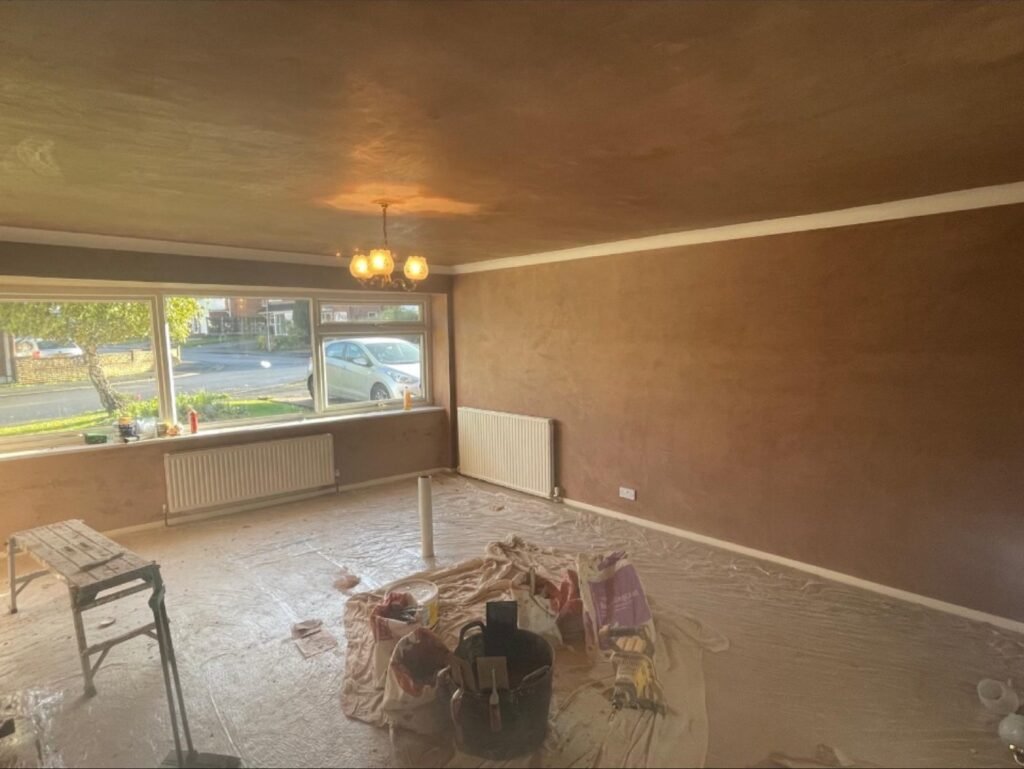
Plastering, re-plastering and repairs in Halesowen
Plastering walls and ceilings
New finish plaster over sound walls gives a smooth, flat face ready for paint. It is our most common job in Halesowen: after a rewire, after old paper comes off, or when a room has been patched so often it never looks right. We cover floors and furniture, prepare the walls, fix any loose areas, then put on the new coat and trowel it smooth.
Re-plastering
If the old plaster is too far gone to go over, it has to come off. It may be blown, cracked right through, crumbling or soft from damp. We take it back to the brick or block and re-plaster with a backing coat and a finish coat, or board the wall and plaster over. Re-plastering is common in the older terraces round the town centre, Cradley and Old Hill.
Plaster repairs
Many jobs are smaller than a whole room. We repair cracks, holes, blown patches, damage after a leak, chases left by electricians and plumbers, and broken corners, and blend them in so they don’t show once painted.
Ceilings
Old ceilings sag, crack and come down, most of all lath and plaster ceilings. We over-board and plaster, take down failed ceilings and put up new boards, or repair a small area. We also cover artex with a fresh, smooth coat.
Plasterboard and dry lining
For new walls, stud walls, loft rooms and extensions, we fit plasterboard and plaster it, or dry line walls where the old plaster has failed.
Coving
We fit coving to finish a room, and repair old coving that has cracked or come away.
Halesowen through the years
The abbey and the market
Halesowen Abbey was founded in 1215, and its ruins still stand at Manor Farm on the edge of the town. St John the Baptist Church, with its tall spire, is older still in parts. For centuries Halesowen was a small market town, and for a long time it was a detached part of Shropshire, only joining Worcestershire in 1844.
Nails and iron
From the 1600s, nail making became the town’s big trade. Families made nails by hand in small forges behind their homes, and the work went on into the 1900s. Iron and steel came too, and the great tube works at Coombs Wood, by the canal, was one of the biggest employers in the area until it closed in 1990. The Dudley No. 2 Canal ran through the Lapal tunnel toward Selly Oak, and the line of it can still be traced today.
The Leasowes
The poet William Shenstone made a famous landscape garden at the Leasowes in the 1700s, and people came from far away to see it. It is now a park and golf course on the east side of the town, and the homes round it are some of the most sought after in Halesowen.
Victorian and Edwardian homes
As the works grew, terraces went up round the old town, along Hagley Road, Stourbridge Road and Hagley Street, and in Cradley, Cradley Heath’s edge and Old Hill. Bigger villas went up on the higher ground. These homes were built with solid brick walls, lime plaster and lath ceilings, and much of that is still there.
Between the wars
In the 1920s and 1930s, semis spread along the Hagley Road toward Quinton, into Hasbury, Hurst Green and Hawne, and along Manor Way. Most were built with hard wall plaster on brick and lath and plaster or early board ceilings, and they are now close to a hundred years old.
After the war
After 1945 the town grew fast. Council estates went up at Cakemore, Hawne, Belle Vale and Cradley, and from the 1960s large private estates spread across Hayley Green, Lapal, Hasbury and Illey. The town centre was rebuilt in the 1960s, with the Cornbow Centre and Halesowen College. In 1974 Halesowen joined Dudley borough.
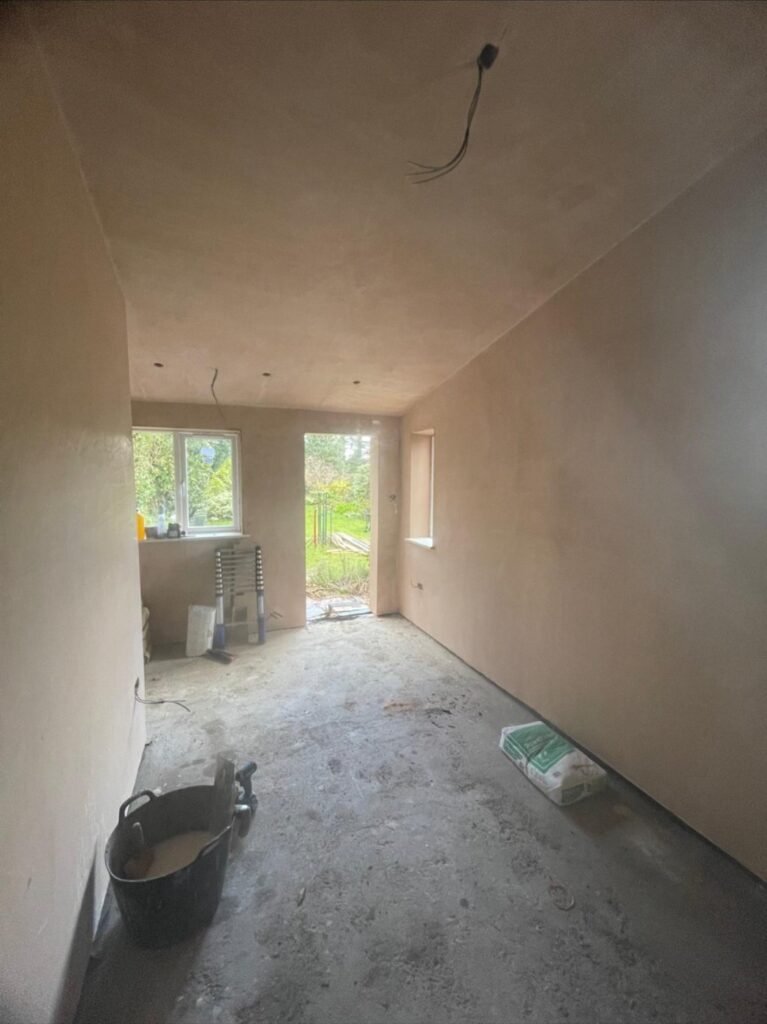
The homes we plaster most in Halesowen
Victorian and Edwardian terraces
Round the town centre, along the Stourbridge Road and in Cradley and Old Hill. Solid brick walls with old lime plaster, often blown in places and patched many times. Lath and plaster ceilings that sag or crack. We re-plaster walls where the old plaster has failed, repair what is sound, and over-board or replace old ceilings.
Larger older homes
On the higher ground near the Leasowes, along the Hagley Road and round Hasbury. High ceilings, bay windows, picture rails and coving. We take care to keep the features you want and to get high ceilings flat and true.
1930s semis
Hurst Green, Hasbury, Hawne, Manor Way and the roads toward Quinton and Lapal. Hard plaster on brick, cracked and patched after years of rewiring, heating and new windows. Bay windows and curved walls need a careful hand. New plaster on the walls, and ceilings over-boarded where they have cracked.
Post-war estates
Cakemore, Belle Vale, parts of Hawne and Cradley. Many still have their first plaster and artex ceilings. Covering artex, plastering walls after a rewire or new kitchen, and repairs.
1960s to 1980s homes
Hayley Green, Lapal, Illey and much of Hasbury. Cavity walls, plaster on block or board, and textured ceilings. Plastering over tired walls and covering artex are the main jobs here.
Newer homes
Newer streets on old works and college land round the town. Plasterboard walls on dabs that can crack at joins and corners. We repair the cracks, tape the joins and re-plaster where needed.
Neighbourhood notes
Town centre
The old core round St John’s Church and Hagley Street, with shops and flats above, and the 1960s centre round the Cornbow. Repairs in flats, offices and older buildings.
Hasbury and Hayley Green
To the south-west, toward the Clent Hills. Inter-war semis, then 1960s and 1970s estates. Ceilings, artex covering and walls after new kitchens.
Hurst Green and the Quinton side
North-east, along the Hagley Road. Mostly 1930s semis with bay windows and through lounges.
Hawne and Belle Vale
West of the centre. Inter-war and post-war homes. Re-plastering, ceilings and repairs.
Cradley
To the west, by the Stour. Older terraces and post-war homes on steep streets. Re-plastering and lath ceiling work.
Lapal and Illey
East and south-east, near the Leasowes and the countryside. Larger 1960s and later homes. Plastering over tired walls and covering artex.
Cakemore and Blackheath edge
North of the centre. Post-war homes and older terraces. A mix of full re-plasters and repairs.
Romsley and the villages
Out toward the Clent Hills. Cottages with thick walls and old lime plaster, and newer homes. Careful repairs and re-plastering.
Lime plaster in old Halesowen homes
The town’s older terraces and cottages were plastered with lime. Lime is soft and lets a solid wall breathe. It can last for a very long time if the wall stays dry, but leaks, hard cement patches, and plastic paints and vinyl papers that trap damp all damage it.
We look at what is on the wall first. Sound lime plaster can often be kept and repaired. Where it has blown or gone soft, we take it off and re-plaster. On solid walls that have had damp, we pick a plaster that suits the wall, and we will tell you if a lime plaster is the better choice.
Nail-makers’ cottages
A few of the old nail-makers’ cottages still stand in and round Halesowen, often with a small brick workshop at the back where the forge once was. These are small rooms with thick, uneven walls and low ceilings. Many have been changed many times over the years. We take great care with them: repairing what can be kept, re-plastering what can’t, and making sure we don’t trap damp in the old walls.
Hills, slopes and damp walls
Halesowen is a town of hills. Many homes are built into a slope, with the back wall partly below the ground at the rear, or a cellar under the front room. Those walls often get damp, and plaster on them blows and stains. New plaster won’t last on a wet wall. We will look at why the wall is damp, tell you what we see, and plaster with the right materials once the cause has been dealt with.
Plastering after damp work
Many Halesowen homes have had damp work over the years. After a damp course or new drainage, the walls need re-plastering with the right plaster. We will ask what was done and by whom, so we pick the right plaster for it. If the cause of the damp hasn’t been dealt with, we will say so before we plaster.
Chimney breasts and old fireplaces
Older homes have chimney breasts in most rooms. The plaster round old fireplaces is often cracked, stained or patched, and when a fire is opened up or closed off, the wall needs making good. We plaster round new openings and over closed ones so the wall looks right.
Bay windows and curved walls
1930s semis in Hurst Green, Hasbury and along the Hagley Road often have big bay windows. The walls and ceilings in the bay have tricky angles and curves. We keep them true and get crisp lines where the bay meets the room.
Plastering for new kitchens
When a new kitchen goes in, old tiles and units come off and the walls behind are often rough and uneven. We plaster them flat so the new units sit well and the tiles or paint look right. We fit in with your kitchen fitter so the walls are ready and dry in time.
Plastering after a leak
A burst pipe or a leak from above can soak a ceiling and walls. Once the leak is fixed and things have dried out, we take off the damaged plaster and repair or replace it. A sagging, wet ceiling needs care. If you see one, keep out of the room and turn off the water.
Garages, utility rooms and outbuildings
Garage conversions and utility rooms need their walls and ceilings boarded and plastered. Bare block walls can be plastered direct or dry lined. We will talk you through which suits your room best.
How a Halesowen plastering job runs
First contact
You WhatsApp me photos of each room and the walls and ceilings you want done, with your postcode. A short video walking through helps even more.
The visit
For bigger jobs we come out, tap the walls for hollow areas, look at the ceilings, and talk through what you want and when.
The quote
You get a clear written quote that says which rooms, which walls and ceilings, whether we are plastering over or taking back, and how long it should take.
On the day
We arrive at 7am, cover the floors and furniture, and set up a clean work area. Old plaster comes off where needed, beads go on the corners, and the new coat goes on.
Finishing up
We clean up, take the rubbish away, and tell you how long to leave the walls before you paint.
What goes on your walls
We pick the plaster to suit the wall.
- Finish plaster is the thin top coat that gives the smooth face.
- Backing coats build up the wall when old plaster comes off. Some suit hard brick, some suit soft brick or block.
- Lime plaster suits some old solid walls where the wall needs to breathe.
- Plasterboard comes in standard, moisture-resistant and fire-rated types.
- Beads and tape give straight corners and stop cracks at joins.
Artex: what you should know
Many Halesowen homes built before the 1990s have artex on the ceilings. Old artex can contain a small amount of asbestos. It is safe while it is left alone, which is why we plaster over it rather than scrape or sand it. If you want it taken off, it should be tested first.
Bathrooms and shower rooms
Old plaster round baths and showers is often soft, stained or blown. We take off what has failed, use moisture-resistant boards where needed, and plaster the rest so your tiler or decorator has a flat, sound wall. An extractor fan that works makes a big difference.
Stairwells and tall walls
Stairwells take a lot of knocks and are hard to reach. In Halesowen homes built on a slope, the stair wall can be very tall. We use proper stair platforms to reach safely, and plaster the full height in one go.
Questions we often get in Halesowen
Can you plaster over my old walls?
If the old plaster is sound, yes. If it is blown, cracked through or damp, it needs to come off first. We tap every wall before we decide.
My ceiling is cracked all over. Does it have to come down?
Not always. Often we can over-board and plaster it, which is quicker and less messy. If it is sagging badly, it may need to come down.
Can you cover my artex ceiling?
Yes. We plaster over artex without disturbing it.
How soon can I paint?
Usually about a week for a finish coat in a warm, airy room. Longer for thick re-plastering or in winter.
The year in plastering
Plastering is an inside job, so we work all year round. In winter, new plaster takes longer to dry, so keep the heating on low and a window open a little. In summer, sunny rooms can dry plaster too fast, so we may keep the blinds down while we work.
If you have just moved in
If you have just bought a home in Halesowen, the walls and ceilings are best sorted before you decorate, lay new carpets or move furniture in. We can plaster several rooms in one go so you are ready to paint.
Plaster or dry lining?
- Wet plaster goes straight onto brick or block in a backing coat, then a finish coat. It is hard and solid, and good on walls that take knocks. It takes longer to dry.
- Dry lining means fixing plasterboard to the wall, then a finish coat. It dries quicker and suits walls that are very uneven or where old plaster has failed badly.
On old solid walls in Cradley and the town centre, the right choice depends on the state of the wall and whether there has been damp. We will tell you what we think suits it best.
Uneven walls in old houses
Walls in older Halesowen homes are rarely straight. They lean, bow and dip, and the corners are not square. We can make them much flatter, but on very old walls we will talk to you first about how far to go. Sometimes a wall that follows the line of the house looks better than one forced flat.
Cold walls and black mould
Solid brick walls in older homes are colder than cavity walls. In winter, damp air from cooking, washing and drying clothes settles on them, and black mould can grow in corners and behind furniture. New plaster won’t cure that on its own. Good airflow, extractor fans and keeping furniture a little off the wall all help. We will give you honest advice on what is plaster and what is air.
Flats above shops
Hagley Street, Peckingham Street, Great Cornbow and the local parades in Hasbury and Hurst Green have flats above shops. They often have old ceilings and walls that need care. We plan the work round the shop below and keep dust and noise down.
Old wiring, pipes and plaster
If you are having a rewire or new heating, have it done before we plaster. Chasing cables into new plaster means patching it again. We are happy to fit our work round your electrician and plumber.
Before you sell
Buyers notice cracked ceilings and patched walls. A fresh coat of plaster and a coat of paint make a home look clean and well kept for photos and viewings. Send us photos and we will tell you which rooms will make the most difference.
Rooms we plaster most
- Living rooms and through lounges: walls after paper comes off, ceilings with cracks or artex.
- Bedrooms: ceilings that sag, walls with cracks and old patches.
- Kitchens: walls after old units and tiles come off.
- Bathrooms: walls and ceilings in damp rooms, with the right boards and plaster.
- Halls, stairs and landings: walls that take knocks, and tall stairwells.
- Extensions and loft rooms: new boards and block, plastered ready for paint.
Dust and mess
We cover floors, stairs and furniture, seal doors where needed, and carry rubbish out as we go. When a ceiling has to come down, we close the room off and protect the rest of the house. At the end of the day the room is swept and tidy.
Loft rooms and extensions
Many Halesowen families add space rather than move. Loft rooms in semis and bungalows, and single-storey extensions at the back, all need boards fixed and plastered. We work with your builder and fit in at the right stage, after the electrics and pipes and before the decorator.
Painting new plaster
New plaster needs to dry right through before you paint. It will change from dark pink to an even pale pink when it is ready. The first coat should be a mist coat, a thinned-down emulsion that soaks in and seals the plaster. Avoid vinyl or wipe-clean paints for the first coat, as they can peel.
Cradley and the Stour valley
Cradley sits low on the west side of the town, where the River Stour runs down toward Lye and Stourbridge. It was a place of chain and nail making, and its streets climb steeply from the river. Many homes are older terraces with solid walls, and the ones near the river or built into the bank can be damp at the back. We see a lot of blown plaster low on walls, lath ceilings that have sagged, and rooms patched so often that no two areas match. A full re-plaster often makes more sense here than one more patch.
Homes near the Clent Hills
Out toward Romsley, Illey and the Clent Hills, the homes are a mix of old farm cottages, inter-war houses and larger homes from the 1960s on. The cottages have thick walls of brick or stone, low ceilings and old beams, and they need a gentle hand. The larger homes tend to have big open rooms, tall hallways and long ceilings that show every crack. We plan each one on its own.
Coving, picture rails and features
Many older Halesowen homes still have coving, picture rails, dado rails or ceiling roses. You may want to keep them, or you may want them gone. If they come off, we fill and plaster the line they leave so it doesn’t show. If they stay, we plaster neatly up to them. Old cracked coving can be repaired or replaced to match the rest of the room.
Landlords and rented homes
Halesowen has a steady rental market, from terraces near the centre and Halesowen College to family homes on the estates. Landlords tend to want work done quickly between tenants, with as little fuss as possible, and photos of what was done. We plaster and repair rooms on a tight timescale so the home can be painted and let again.
Working with other trades
Most plastering jobs sit in the middle of a bigger plan. The electrician and plumber finish first, then we plaster, then the decorator, carpet fitter and kitchen fitter follow on. We are happy to talk to your other trades so the timing works. If you are doing some of the work yourself, we will tell you what needs to be done before we arrive.
Questions to ask any plasterer
- Will you plaster over the old walls or take them back?
- What plaster will you use, and why?
- How will you protect my floors and furniture?
- Who will do the work, and how long have they been plastering?
- How long before I can paint?
- Can I see finished jobs?
We are glad to answer all of these before you decide.
Why plastering makes such a difference
Smooth, flat walls make a room look bigger and brighter, and paint goes on easier and lasts longer. Cracks and patches disappear. A well plastered ceiling makes a room feel fresh. In a 1930s Halesowen semi with tired, patched walls, new plaster through the downstairs rooms can change the whole feel of the house.
Picking the right time
Because plastering is inside work, the weather doesn’t stop us. Most people like to have it done in one block, room by room, so they only live with the mess once. If you have a lot of rooms to do, we work round you so you always have somewhere to sit and sleep. If you are having other work done, such as a new kitchen or bathroom, we fit in at the right point.
Old works and shops turned into homes
Round the canal at Coombs Wood, the edge of the town centre and parts of Cradley, some old works, chapels and shops have been turned into homes or flats. Their walls are often a mix of old brick, newer block and boards, and some have tall ceilings and big windows. Each part needs the right backing, and joins between old and new need tape or mesh so they don’t crack. We look at each wall and plan the job so the finish is even all over.
Flats and maisonettes
Halesowen has many low-rise blocks of flats and maisonettes, from the post-war estates to newer blocks near the centre. Getting materials in and rubbish out takes planning, and the work has to fit round neighbours. We protect stairs, lifts and shared halls, and keep the job tidy. If you rent from a housing group, check with them before any work starts.
Garden rooms and home offices
More people in Halesowen now work from home, and many have built a garden room or turned a box room into an office. Garden rooms built with timber or block need the right boards and plaster inside to give a smooth, solid finish. Box rooms in older homes often have the worst walls in the house, as they were never a main room. We plaster both so they are ready to paint and use.
Small jobs welcome
Not every job is a full room. A patch after a leak, a crack over a door, a hole where a fireplace came out or a wall chased for new sockets are all jobs we are happy to do. Send us a photo and we will tell you what is needed.
Areas we cover around Halesowen
We plaster homes across the town and round it, including the town centre, Hasbury, Hayley Green, Hurst Green, Hawne, Belle Vale, Cakemore, Cradley, Lapal, Illey, Romsley, Old Hill and Blackheath, and on to Quinton and the edge of Birmingham.
Nearby pages include rendering in Halesowen, plastering in Stourbridge, plastering in Dudley, plastering in West Bromwich, rendering in Hagley and plastering in Northfield. See every town on our plastering areas page.
What our customers say
Was amazed by the punctuality from them as far as tradesmen go and the experience was stress-free with a great finish to my maisonette.
James Tranter
We chose them for our home extension, and the transformation was amazing. Their work is top-notch, and I’d recommend them to anyone seeking both quality and luxury in construction.
Emma S
These guys were great lads, grafted hard, and was really happy with the price and the end result. Blimey, it was outstanding!
Michael T
Very impressed with the workmanship and attention to detail. The project was completed on time and exceeded my expectations!
Sophia Reynolds, Property Manager
Our services
More services: Plastering repairs · Plastering and coving · Plastering extensions and lofts.
Looking for plasterers in Halesowen?
If you searched for plasterers in Halesowen or a plasterer in Halesowen, this is the page for walls, ceilings, re-plastering and plaster repairs across Hasbury, Hayley Green, Cradley, Hawne, Lapal and Belle Vale. We skim finish coats, board and dry-line new rooms, cover textured ceilings where appropriate, and re-plaster after damp work once the wall is ready. Useful guides: plaster coats explained, plastering over Artex, and dry lining and plasterboarding.
Get a plastering quote in Halesowen
WhatsApp me on 07453 614095 or message the page. Send pictures or videos via WhatsApp for a quick response, a free quote and advice. Send a photo of each wall and ceiling and your postcode.
Opening hours: Monday to Friday 7am to 5pm, Saturday 7am to 1pm, Sunday closed.
You can also email rcrconnectionsltd@gmail.com or use our contact page. See finished jobs on our projects page.
Plastering in Halesowen: common questions
Do you cover Halesowen and the areas round it?
Yes. RCR Connections Ltd is Birmingham based, covering the whole of the Midlands, and works across Halesowen, from Hasbury and Hayley Green to Cradley, Hawne and Lapal.
Are you plasterers covering Halesowen?
Yes. RCR Connections Ltd plasters walls and ceilings across Halesowen and the surrounding neighbourhoods listed on this page. Call or WhatsApp 07453 614095 with photos for a free quote.
How do I get a plastering quote in Halesowen?
WhatsApp me on 07453 614095 or message the page. Send photos of the walls and ceilings and your postcode. We will come back with a free quote, or arrange a visit.
Do you re-plaster whole rooms?
Yes. Where old plaster is blown, cracked or damp, we take it back and re-plaster the room from scratch.
Can you plaster a damp wall in a house built on a slope?
We will look at why the wall is damp first. Once the cause has been dealt with, we re-plaster with materials that suit the wall.
Do you do small plaster repairs?
Yes. We repair cracks, holes, blown patches, chases after a rewire and damage after a leak.
Can you plaster ceilings in older Halesowen houses?
Yes. Many older semis and terraces in Halesowen have cracked or sagging ceilings. We over-board and plaster them, or replaster where the old ceiling is sound enough to keep. RCR Connections Ltd has 62 years of combined experience with ceilings like these.
How soon can I paint new plaster?
New plaster needs to dry first, which is often about a week for a room, longer in cold or damp weather. It turns a light even colour when it is dry. Then use a mist coat before your top coats. WhatsApp me on 07453 614095 or message the page if you are not sure.
What hours do you work?
Monday to Friday 7am to 5pm and Saturday 7am to 1pm. Sunday closed.